

If you have heard Muslims say Astaghfirullah, you may wonder, what does Astaghfirullah mean and why is this short phrase repeated so often? In simple terms, it is an expression used to ask Allah for forgiveness. However, its meaning goes deeper than simply saying “I am sorry.” It reflects humility, repentance, awareness of one’s mistakes, and hope in Allah’s what does Astaghfirullah mean
The phrase comes from the Arabic word for seeking forgiveness. Muslims may say it after making a mistake, during personal worship, after prayer, or whenever they remember their need for Allah’s mercy. Therefore, understanding its meaning can help a person appreciate the spiritual purpose behind istighfar, the act of seeking forgiveness fromwhat does Astaghfirullah mean
This guide explains the meaning, pronunciation, religious significance, appropriate uses, common forms, and practical ways to include Astaghfirullah in daily remembrance. It also clears up several common misunderstandings about the what does Astaghfirullah mean
What Does Astaghfirullah Mean in Simple English?
- Astaghfirullah is commonly translated as “I seek forgiveness frowhat does Astaghfirullah mean
- Another natural translation is “I ask Allah for fwhat does Astaghfirullah mean”
- The phrase expresses a person’s need for Allah’s mercy and what does Astaghfirullah mean
- It can be said after recognizing a sin orwhat does Astaghfirullah mean
- It can also be part of regular dhikr, meaning the remembrance ofwhat does Astaghfirullah mean
- The expression does not merely describe regret. It represents a request directed toward what does Astaghfirullah mean
- Therefore, when someone asks what does Astaghfirullah mean, the simplest answer is: it means seeking forgiveness from what does Astaghfirullah mean
- The phrase carries a sense of humility because the speaker acknowledges that Allah is the One from whom forgiveness is what does Astaghfirullah mean
- At the same time, it reflects hope because Islam teaches believers to turn back to Allah rather than despair of His what does Astaghfirullah mean
- For many Muslims, saying Astaghfirullah becomes a regular spiritual practice rather than something reserved only for serious what does Astaghfirullah mean

The Arabic Meaning Behind Astaghfirullah
- The Arabic expression is commonly written as أَسْتَغْفِرُ اللَّهَ.
- It is transliterated as Astaghfirullah.
- The first part, astaghfiru, conveys the meaning of seeking or asking for fwhat does Astaghfirullah mean
- The second part, Allah, refers towhat does Astaghfirullah mean
- Together, the phrase means that the speaker is asking Allah fowhat does Astaghfirullah mean
- Arabic words can contain layers of meaning that are not always captured by one Englishwhat does Astaghfirullah mean
- For this reason, “I seek forgiveness from Allah” is more useful than treating the phrase as a casual equivalent of “sorry.”
- The expression points toward an intentional relationship between the person seeking forgiveness andwhat does Astaghfirullah mean
- This distinction is important because istighfar is connected with repentance, worship, humility, anwhat does Astaghfirullah meanawareness.
- Consequently, knowing what does Astaghfirullah mean helps explain why the phrase has such an important place in Islamic what does Astaghfirullah mean
The Power of the Word Astaghfirullah
- One reason Astaghfirullah is powerful is that it turns a person’s attention towardwhat does Astaghfirullah mean
- When someone admits a mistake, the phrase encourages humility rather than what does Astaghfirullah mean
- It also reminds a believer that human beings are imperfect and need divinwhat does Astaghfirullah mean
- Moreover, saying Astaghfirullah can encourage a person to examine theirwhat does Astaghfirullah mean
- Instead of ignoring a mistake, a believer can acknowledge it and seek to correcwhat does Astaghfirullah mean
- This makes istighfar more meaningful when it is connected with sincere what does Astaghfirullah mean
- The phrase can also provide spiritual comfort to someone who feels guilty about a wrong what does Astaghfirullah mean
- However, Muslims should not understand it as a magical formula that automatically removes every consequence of wwhat does Astaghfirullah mean
- Genuine repentance involves sincerity and a willingness to leave sinful what does Astaghfirullah mean
- Therefore, the real power of Astaghfirullah comes from turning sincerely towardwhat does Astaghfirullah mean
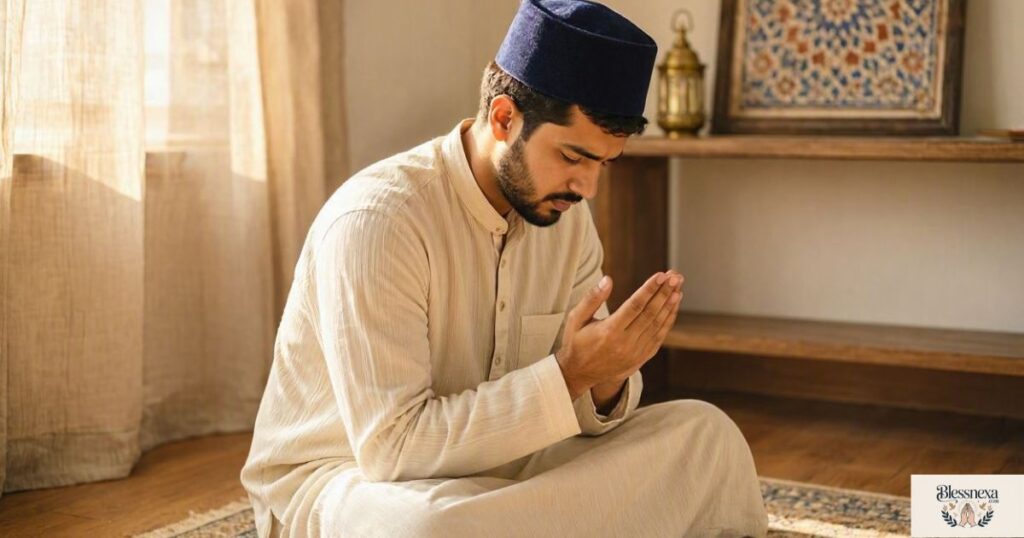
Why Muslims Say Astaghfirullah
- Muslims say Astaghfirullah because seeking forgiveness is an important part of Islamic what does Astaghfirullah mean
- Human beings make mistakes, and Islam encourages believers to return to Allah afterwhat does Astaghfirullah mean
- The phrase provides a simple way to express this what does Astaghfirullah mean
- It can be spoken quietly during personalwhat does Astaghfirullah mean
- It can also be included in regular dhikr throughout thwhat does Astaghfirullah mean
- Muslims may say it after realizing that they have spoken harshly or acted what does Astaghfirullah mean
- Some people repeat it while thinking about their behavior and asking Allah for what does Astaghfirullah mean
- Others include it in their morning or eveninwhat does Astaghfirullah mean
- It is also commonly associated with the remembrance performed after obligatory prayers.
- Thus, Astaghfirullah can connect everyday life with spiritual awareness.
When Should You Say Astaghfirullah?
- There is no need to wait for a dramatic event before seeking forgiveness.
- A Muslim can say Astaghfirullah whenever they recognize a need for forgiveness.
- It can be especially meaningful after committing a sin.
- It may also be appropriate after realizing that someone was hurt by one’s words or actions.
- A person can say it after becoming aware of a personal weakness.
- It can be included in regular dhikr without waiting for a specific mistake.
- Muslims also commonly say it after completing the obligatory prayer.
- During moments of reflection, the phrase can help a person remember Allah.
- Someone facing temptation may use istighfar as a reminder to return to obedience.
- Before sleeping, a person may reflect on the day and ask Allah for forgiveness.
- The important point is sincerity rather than treating the phrase as a mechanical routine.
Astaghfirullah After Making a Mistake
- One of the clearest situations for saying Astaghfirullah is after recognizing a mistake.
- The mistake could involve speech, behavior, neglect, or another form of wrongdoing.
- First, a person should recognize that the action was wrong.
- Next, they should sincerely seek Allah’s forgiveness.
- If another person’s rights were involved, they should also take appropriate steps to repair the harm.
- Simply repeating Astaghfirullah while intentionally continuing the same wrongdoing does not represent complete repentance.
- Instead, sincere tawbah, or repentance, involves turning away from the sinful action.
- A person should also try not to return to the same behavior.
- If the mistake involves another person, apologizing and making amends can be important.
- Therefore, Astaghfirullah should inspire action rather than replace it.
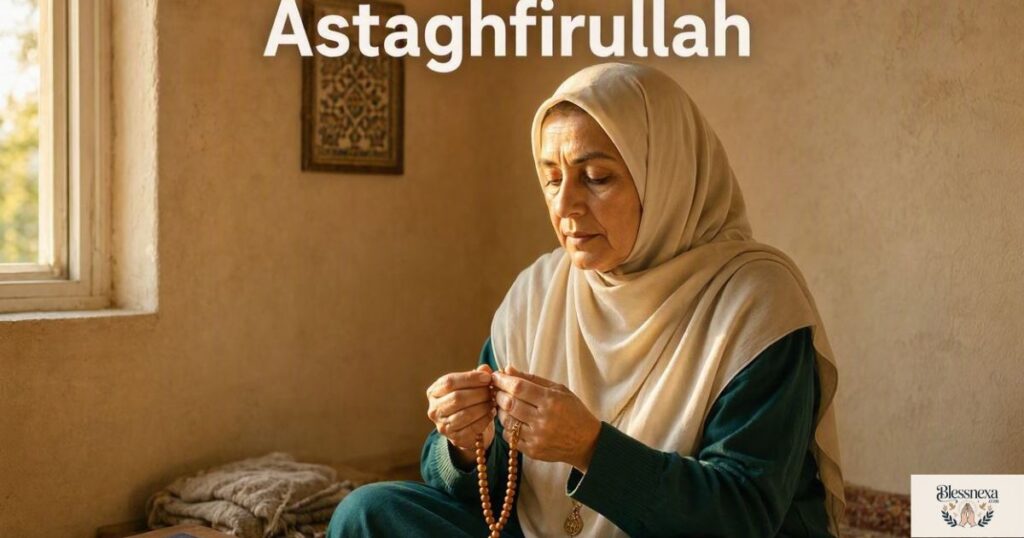
Astaghfirullah During Daily Dhikr
- Dhikr means remembering Allah, and seeking forgiveness is an important form of remembrance.
- A Muslim does not have to wait until feeling guilty to remember Allah.
- Regular istighfar can keep the heart conscious of its dependence on Allah.
- It can be practiced during quiet moments.
- Someone may say Astaghfirullah while walking, traveling, waiting, or completing ordinary tasks.
- The practice can help turn routine moments into opportunities for remembrance.
- However, concentration and sincerity are more valuable than simply rushing through a large number of repetitions.
- A person should understand what they are saying.
- They should also avoid treating a specific number as a guarantee of a particular worldly outcome unless that number has authentic religious evidence.
- In this way, daily Astaghfirullah becomes a meaningful act of remembrance.
Astaghfirullah After Salah
- Muslims commonly seek forgiveness after completing the obligatory prayer.
- This practice is supported by authentic Islamic tradition concerning the Prophet Muhammad ﷺ.
- It reminds believers that even after worship, they remain in need of Allah’s forgiveness.
- Prayer is an important act of obedience, yet human beings can still experience shortcomings in concentration and performance.
- Saying Astaghfirullah afterward expresses humility.
- It can also help a worshipper transition from formal prayer into continued remembrance.
- Therefore, the phrase has a natural place in post-prayer adhkar.
- Muslims should learn the established supplications from reliable Islamic sources rather than relying only on social-media lists.
- A qualified scholar or trusted Islamic reference can help clarify differences between authentic and weak reports.
- This approach keeps personal worship connected with sound religious knowledge.

Astaghfirullah in Times of Hardship
- People sometimes turn to Astaghfirullah during difficult periods.
- Hardship can remind a person of their dependence on Allah.
- Seeking forgiveness can become part of a broader practice of prayer, patience, and supplication.
- However, Islam does not teach that every hardship is automatically caused by a particular sin.
- Difficulties can have many causes and can also be tests, opportunities for patience, or part of circumstances beyond human control.
- Therefore, a believer should not automatically blame themselves whenever something goes wrong.
- Instead, they can ask Allah for forgiveness while also making lawful practical efforts to solve the problem.
- Istighfar can accompany dua, prayer, patience, and trust in Allah.
- This balanced approach avoids turning a spiritual practice into superstition.
- Ultimately, the believer seeks Allah’s help while accepting that outcomes belong to Him.
Astaghfirullah and Sincere Repentance
- Astaghfirullah and tawbah are closely connected, but they are not identical concepts.
- Astaghfirullah is an expression of seeking forgiveness.
- Tawbah refers to turning back to Allah through sincere repentance.
- A person may say Astaghfirullah as part of that process.
- Genuine repentance generally involves recognizing the wrongdoing.
- It also involves feeling sincere remorse for the action.
- A person should stop the sinful behavior when possible.
- They should also have a genuine intention not to return to it.
- If another person’s rights were violated, restitution or an appropriate apology may also be necessary.
- Thus, saying Astaghfirullah is most meaningful when it accompanies sincere change.

What Astaghfirullah Teaches About Allah’s Mercy
- The phrase carries an important lesson about the relationship between sin and hope.
- A believer may make mistakes without believing that forgiveness is impossible.
- Islam teaches Muslims to turn toward Allah rather than surrender to despair.
- Therefore, Astaghfirullah can become an expression of hope.
- It reminds a person that they can seek Allah’s forgiveness after recognizing wrongdoing.
- This does not mean taking sin lightly.
- Instead, it creates a balance between fear of wrongdoing and hope in divine mercy.
- A healthy spiritual attitude encourages accountability without hopelessness.
- When a person makes a mistake, they can acknowledge it and return to Allah.
- This is one reason the simple phrase has such profound spiritual meaning.
Astaghfirullah and the Quran
- The Quran frequently discusses seeking Allah’s forgiveness and turning back to Him.
- One well-known passage in Surah Nuh connects seeking forgiveness with Allah’s mercy and blessings.
- In Surah Hud, believers are encouraged to seek forgiveness and repent.
- The Quran also describes Allah as forgiving and merciful in numerous passages.
- These teachings provide an important context for understanding istighfar.
- The concept is not simply about repeating a phrase.
- Rather, it belongs to a broader Quranic message about repentance, obedience, humility, and hope.
- Readers should consult a reliable Quran translation and tafsir for the full context of these verses.
- This is especially important because individual verses should not be interpreted in isolation.
- Consequently, understanding Astaghfirullah becomes richer when the phrase is studied alongside the Quran’s broader teachings about forgiveness.
Benefits of Saying Astaghfirullah
- The spiritual benefits of istighfar should be understood through Islamic teachings rather than exaggerated promises.
- Seeking forgiveness can encourage humility.
- It can remind a person to examine their behavior.
- It can encourage sincere repentance after wrongdoing.
- It can strengthen awareness of Allah.
- It can help a person maintain regular dhikr.
- It can provide spiritual comfort when someone sincerely turns back to Allah.
- It can encourage a person to replace harmful behavior with better actions.
- Quranic teachings also connect seeking forgiveness with Allah’s mercy and blessings.
- However, Muslims should avoid claiming that saying Astaghfirullah guarantees a specific financial, medical, or worldly result.
- The benefits of worship should be understood within the framework of faith and sincere devotion.

A Simple Guide to Practicing Istighfar
- Begin by understanding the meaning of the phrase.
- Say Astaghfirullah consciously rather than only moving your lips.
- Think about what you are asking Allah to forgive.
- If you have committed a known sin, sincerely regret it.
- Stop the wrongdoing when you are able.
- Make a genuine intention to avoid repeating it.
- If another person was harmed, consider how you can make things right.
- Include istighfar in your regular dhikr.
- Avoid becoming obsessed with counting repetitions.
- Focus on sincerity, humility, and actual improvement.
- Learn additional supplications for forgiveness from reliable Islamic sources.
- Maintain hope in Allah while remaining serious about correcting your behavior.
Powerful Astaghfirullah Messages for Daily Reflection
- Astaghfirullah — may my heart return to Allah with sincere repentance.
- Astaghfirullah — I seek Your forgiveness for what I know and what I have forgotten.
- Astaghfirullah — may Allah guide me away from every wrong path.
- Astaghfirullah — may my mistakes become lessons that bring me closer to Allah.
- Astaghfirullah — may Allah forgive my hidden and visible shortcomings.
- Astaghfirullah — may my heart remain humble before my Creator.
- Astaghfirullah — may Allah help me leave behind the habits that harm my faith.
- Astaghfirullah — may sincere repentance bring peace to my heart.
- Astaghfirullah — may Allah forgive my words, actions, and intentions.
- Astaghfirullah — may I recognize my mistakes and have the courage to change.
- Astaghfirullah — may Allah guide me toward what is good and away from what is harmful.
- Astaghfirullah — may my return to Allah be sincere and lasting.
- Astaghfirullah — may Allah cover my faults with His mercy and guide my future.
- Astaghfirullah — may remembrance of Allah keep my heart awake.
- Astaghfirullah — may every sincere repentance bring me closer to obedience.

Different Forms of Seeking Forgiveness
- The shortest common expression is Astaghfirullah.
- Another familiar supplication is Astaghfirullah wa atubu ilayh, meaning “I seek Allah’s forgiveness and repent to Him.”
- Muslims may also encounter Astaghfirullah al-Azeem, commonly translated as “I seek forgiveness from Allah, the Magnificent.”
- These expressions should be understood rather than repeated without awareness.
- Longer supplications for forgiveness are also found in Islamic tradition.
- One famous supplication is Sayyid al-Istighfar, often called the master supplication for seeking forgiveness.
- Each form has its own wording and should be learned from reliable Islamic sources.
- Pronunciation can vary slightly between transliteration systems.
- Therefore, beginners should focus first on learning the Arabic pronunciation accurately.
- They should also understand the meaning so that the words become part of conscious worship.
Astaghfirullah vs. Tawbah: What Is the Difference?
- Astaghfirullah means seeking forgiveness from Allah.
- Tawbah means turning back to Allah in repentance.
- The two ideas are closely connected.
- A person can say Astaghfirullah while making sincere tawbah.
- Tawbah, however, involves more than words.
- It includes recognizing wrongdoing and turning away from it.
- For example, someone who lies repeatedly cannot reasonably treat repentance as merely repeating a phrase while continuing the behavior without concern.
- Instead, sincere repentance should produce an effort to change.
- Thus, istighfar can be an important expression of tawbah.
- Yet the quality of repentance depends on sincerity and action.
Astaghfirullah vs. Alhamdulillah
- Astaghfirullah and Alhamdulillah have different meanings.
- Astaghfirullah means “I seek forgiveness from Allah.”
- Alhamdulillah means “All praise belongs to Allah” or “Praise be to Allah.”
- Muslims use Alhamdulillah to express gratitude, praise, and recognition of Allah’s blessings.
- They use Astaghfirullah when seeking forgiveness.
- Both phrases are forms of remembrance.
- However, their purposes are different.
- A person may say Alhamdulillah after receiving good news.
- A person may say Astaghfirullah after recognizing a mistake.
- Understanding this distinction makes everyday Islamic expressions easier to use correctly.
Is Astaghfirullah Only for Major Sins?
- No, Muslims do not need to wait until they commit a major sin before seeking forgiveness.
- Human beings can have many shortcomings.
- A person may seek forgiveness for mistakes in speech, behavior, intention, or worship.
- Regular istighfar can also be part of general remembrance.
- This does not mean every ordinary action should be treated as a sin.
- Instead, it reflects a believer’s awareness that human beings remain dependent on Allah.
- The phrase can therefore be used for both specific repentance and general spiritual remembrance.
- What matters is sincerity and understanding.
- Consequently, asking what does Astaghfirullah mean should lead to understanding its broader spiritual purpose rather than limiting it to one situation.
Common Mistakes People Make With Astaghfirullah
- Some people treat Astaghfirullah as an automatic phrase with no connection to repentance.
- Others believe simply repeating it guarantees a specific worldly result.
- Some may use it as a substitute for correcting harm done to another person.
- Another mistake is assuming that every hardship proves someone committed a particular sin.
- Some people also become overly focused on numbers while ignoring sincerity.
- Another problem is sharing dramatic claims about istighfar without checking their Islamic sources.
- People may also pronounce Arabic words incorrectly because they rely only on English transliteration.
- Therefore, learning from qualified scholars and reliable Islamic resources is valuable.
- The goal should be meaningful worship rather than collecting impressive-sounding claims.
- A sincere understanding of Astaghfirullah is more valuable than mechanical repetition.
How to Pronounce Astaghfirullah Correctly
- The phrase can be transliterated as Astaghfirullah.
- A beginner can approximately divide it into: As-tagh-fi-rul-lah.
- The Arabic spelling is أَسْتَغْفِرُ اللَّهَ.
- English transliteration cannot perfectly represent every Arabic sound.
- The Arabic letter غ has a sound that does not have an exact equivalent in standard English.
- Therefore, listening to a qualified Arabic teacher can improve pronunciation.
- Beginners should not become discouraged if their pronunciation is imperfect at first.
- Learning gradually is better than avoiding the phrase because of fear of mistakes.
- Understanding the meaning should accompany pronunciation practice.
- Over time, consistent practice can make the phrase easier to pronounce naturally.
A Practical Daily Istighfar Routine
- Morning: Begin the day with a short period of remembrance and sincere istighfar.
- After prayer: Include the established post-prayer remembrance taught in Islamic tradition.
- During quiet moments: Repeat Astaghfirullah while reflecting on your relationship with Allah.
- After a mistake: Acknowledge the mistake instead of making excuses.
- Before sleeping: Review the day and ask Allah for forgiveness.
- During temptation: Use remembrance as a reminder to step away from harmful behavior.
- During gratitude: Remember that humility and gratitude can exist together.
- During personal dua: Ask Allah for forgiveness in your own words as well.
- Weekly reflection: Consider whether your repentance is producing real improvements.
- Always: Keep your practice sincere rather than becoming focused only on numbers.
A Helpful Comparison of Common Islamic Expressions
| Phrase | Basic Meaning | Common Purpose |
| Astaghfirullah | I seek forgiveness from Allah | Seeking forgiveness |
| Alhamdulillah | Praise be to Allah | Gratitude and praise |
| SubhanAllah | Glory be to Allah | Expressing Allah’s perfection |
| Allahu Akbar | Allah is the Greatest | Declaring Allah’s greatness |
| La ilaha illallah | There is no deity worthy of worship except Allah | Affirming Islamic monotheism |
| InshaAllah | If Allah wills | Referring to future intentions |
| MashaAllah | What Allah has willed | Expressing appreciation or acknowledging something good |
Why Understanding the Meaning Matters
- Repetition becomes more meaningful when a person understands the words being spoken.
- Someone who knows what does Astaghfirullah mean can connect the phrase with sincere intention.
- Understanding also helps prevent the phrase from becoming an empty habit.
- When a Muslim says “I seek forgiveness from Allah,” the statement can encourage personal accountability.
- It can prompt reflection on behavior.
- It can also remind the person that Allah’s forgiveness is sought through sincere worship and repentance.
- This is why learning the meaning of common Islamic phrases is valuable.
- It transforms familiar words into conscious acts of remembrance.
- The same principle applies to other forms of dhikr.
- Meaning, intention, and action can work together to strengthen spiritual practice.
The Emotional Side of Seeking Forgiveness
- Guilt can sometimes become overwhelming after a person recognizes a serious mistake.
- Islamic repentance offers a healthier direction than simply remaining trapped in guilt.
- Saying Astaghfirullah turns the person’s attention toward Allah.
- Instead of pretending that the mistake never happened, the person acknowledges it.
- Instead of assuming forgiveness is impossible, they seek Allah’s mercy.
- At the same time, sincere repentance should encourage responsibility.
- A person may need to apologize, repair damage, or change a harmful habit.
- Therefore, seeking forgiveness should produce hope without removing accountability.
- This balance can help a believer respond to mistakes constructively.
- The aim is not to become proud of repentance but to keep returning to Allah.
Astaghfirullah and Personal Growth
- Spiritual growth often begins with recognizing areas that need improvement.
- Istighfar encourages this self-awareness.
- A person who regularly asks Allah for forgiveness may become more conscious of their behavior.
- That awareness can lead to better choices.
- For example, someone who repeatedly regrets angry speech may begin working on patience.
- Someone who struggles with gossip may become more careful about conversations.
- Someone who neglects worship may begin rebuilding a consistent routine.
- In this way, Astaghfirullah can become connected with practical self-improvement.
- The words themselves are important, but the change they inspire is also significant.
- Sincere remembrance should gradually influence how a person thinks and behaves.
Does Saying Astaghfirullah Erase Every Consequence?
- Seeking Allah’s forgiveness is deeply important, but it should not be understood as permission to ignore consequences.
- If a person damages another person’s property, repentance does not automatically remove the need to repair it.
- If someone harms another person, sincere repentance should encourage appropriate restitution.
- If an obligation was neglected, the person should consider what corrective action Islamic law requires.
- Therefore, Astaghfirullah should not become an excuse for avoiding responsibility.
- Instead, it should encourage a person to make things right whenever possible.
- Allah’s forgiveness belongs to Allah.
- Human responsibilities toward other people also matter.
- This distinction helps keep repentance sincere and practical.
- Consequently, the strongest form of istighfar combines prayer with responsible action.
How Parents Can Teach Children Astaghfirullah
- Children can learn the phrase by understanding its simple meaning.
- Parents can explain that Astaghfirullah means asking Allah for forgiveness.
- It is better to teach the concept than to force children to repeat words without understanding.
- Parents can use everyday examples.
- For instance, after a child admits a mistake, they can explain the value of sincere repentance.
- They can also teach that apologizing to another person may be necessary when someone has been hurt.
- Children should learn that seeking forgiveness is not something to fear.
- It is an opportunity to learn and improve.
- Simple explanations can make Islamic concepts easier for young children to remember.
- Over time, the phrase can become a natural part of their spiritual vocabulary.
Astaghfirullah for Beginners: Start With Meaning
- Beginners do not need to create a complicated routine.
- Start by learning that Astaghfirullah means “I seek forgiveness from Allah.”
- Practice the pronunciation slowly.
- Understand when the phrase is appropriate.
- Learn about sincere repentance.
- Add a small amount of dhikr to your daily routine.
- Avoid comparing your practice with someone else’s.
- Do not become discouraged if concentration is difficult at first.
- Continue learning from reliable Islamic teachers and authentic sources.
- Most importantly, remember that the goal is a sincere relationship with Allah rather than simply reaching a repetition target.
FAQs
Is it okay to say Astaghfirullah?
- Yes. Muslims commonly say Astaghfirullah when seeking forgiveness from Allah.
- It can be said after recognizing a mistake or as part of regular dhikr.
- The phrase is especially meaningful when the person understands its meaning and sincerely intends to seek forgiveness.
What does Alhamdulillah mean?
- Alhamdulillah means “Praise be to Allah” or “All praise belongs to Allah.”
- Muslims use it to express gratitude and praise.
- It differs from Astaghfirullah, which is an expression of seeking forgiveness.
Can non-Muslims say Astaghfirullah?
- Anyone can learn the phrase and understand what it means.
- However, its religious meaning is specifically connected with seeking forgiveness from Allah in Islamic belief.
- A non-Muslim who is studying Arabic or Islam may encounter and pronounce the phrase while learning.
Are Christians allowed to say Astaghfirullah?
- There is no language barrier preventing a Christian from saying an Arabic phrase.
- However, Astaghfirullah has a specifically Islamic meaning because it refers to seeking forgiveness from Allah.
- Anyone using it should understand the religious meaning rather than treating it as a meaningless expression.
What happens if you say Astaghfirullah 100 times?
- Repeating Astaghfirullah can be an act of remembrance and seeking forgiveness.
- However, people should avoid assuming that a particular number automatically guarantees a particular worldly result.
- The sincerity of repentance and the person’s intention matter greatly.
- Muslims should rely on authentic Islamic teachings when discussing specific counts and promised rewards.
How do you say Astaghfirullah correctly?
- The Arabic phrase is أَسْتَغْفِرُ اللَّهَ.
- It is commonly transliterated as Astaghfirullah.
- Beginners can practice slowly and listen to reliable Arabic pronunciation.
- Because English letters cannot perfectly represent Arabic sounds, learning directly from an Arabic speaker or teacher can be helpful.
What is Astaghfirullah Al-Azeem?
- Astaghfirullah Al-Azeem is commonly translated as “I seek forgiveness from Allah, the Magnificent.”
- The word Al-Azeem is an Arabic description meaning “the Magnificent” or “the Great.”
- Muslims may encounter this expression in supplications and remembrance.
- When using it, understanding the meaning is more important than repeating it mechanically.
Can I say Astaghfirullah before sleeping?
- Yes, a person may seek Allah’s forgiveness before sleeping.
- The end of the day can be a useful time for reflection.
- A Muslim can review their actions, repent sincerely, and make dua for guidance.
- It can also be helpful to learn the established bedtime adhkar from reliable Islamic sources.
Conclusion
So, what does Astaghfirullah mean? It means “I seek forgiveness from Allah.” Although the phrase is short, its spiritual message is profound. It expresses humility, repentance, accountability, and hope in Allah’s mercy.
For Muslims, Astaghfirullah can be part of everyday dhikr, personal repentance, post-prayer remembrance, and quiet reflection. However, its value is not found in repeating words mechanically. Sincere intention matters. When someone recognizes a mistake, seeks Allah’s forgiveness, and genuinely tries to improve, the phrase becomes part of a meaningful process of returning to Allah.
Ultimately, understanding the meaning of Astaghfirullah can transform a familiar expression into a conscious act of worship. It reminds believers that mistakes do not have to lead to despair. Instead, they can become opportunities to repent, learn, improve, and turn back to Allah with sincerity.

welcome to blessnexa I am Muhammad inam an ai powered seo and content writer with 4 years of experienceI help website rank higher , grow traffic ,and look amazing ,my goal is to make SEO and web design simple andeffective for everyone .lets achieve more togather