
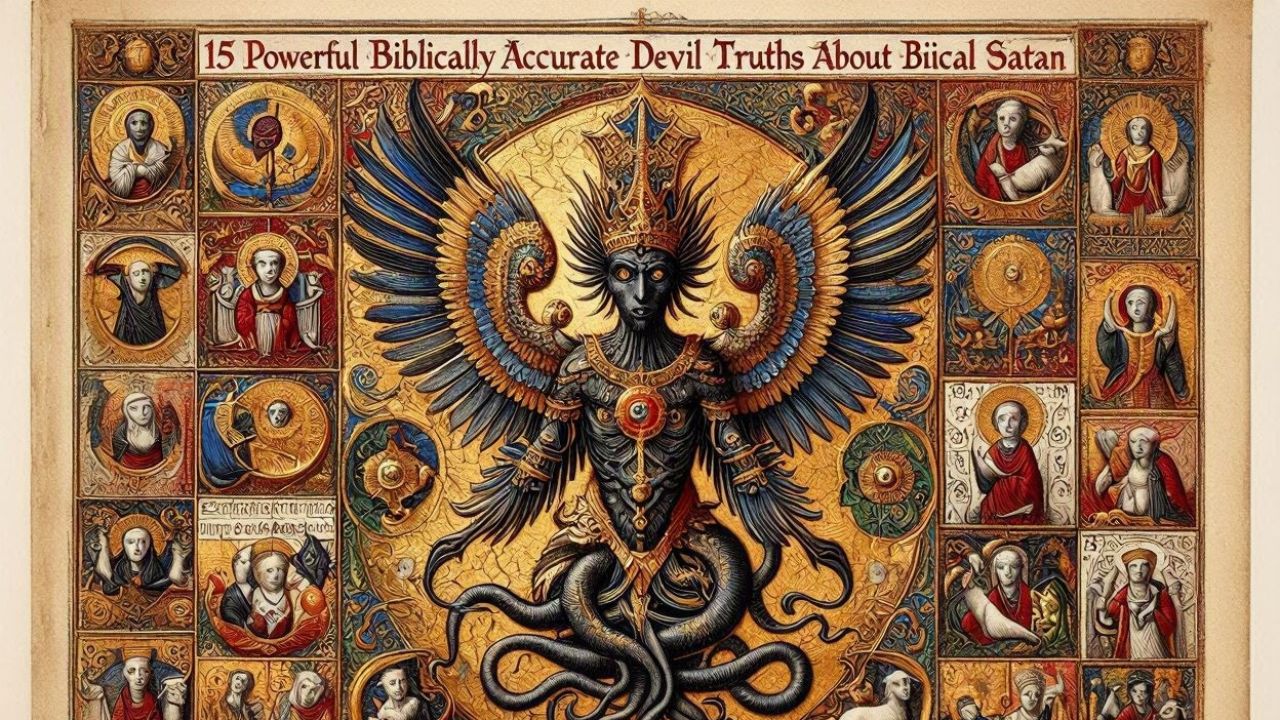
The phrase biblically accurate devil often creates a very different picture from the horned, red-skinned figure seen in movies, cartoons, and paintings. Scripture does not give us one simple portrait that explains every detail of Satan’s appearance. Instead, the Bible describes him through names, actions, symbols, visions, and spiritual roles.
The biblical devil is presented as an adversary, accuser, deceiver, tempter, and enemy of God’s purposes. At the same time, Scripture never presents Satan as equal to God. His authority is limited, his actions are ultimately judged by God, and his final defeat is clearly connected with God’sbiblically accurate devil
Understanding the biblical Satan therefore requires separating Scripture from later artistic traditions. It also requires looking at the different passages that mention Satan, the devil, the serpent, the dragon, and related spiritubiblically accurate devil
This guide examines those passages carefully. It explores what the Bible actually says, what it does not say, and why popular images of the devil often go beyond the biblical tbiblically accurate devil
1. The Powerful Biblical Meaning Behind the Devil’s Name
The word “devil” comes from the Greek diabolos, which carries the idea of a slanderer or false accuser. In the New Testament, the term describes Satan as one who opposes and abiblically accurate devil
- The biblically accurate devil is therefore more than a frightening biblically accurate devil
- His identity is strongly connected with opposition, deception, accusation, andbiblically accurate devil
- Matthew 4:1 calls him “the tempter” during Jesus’ wildernessbiblically accurate devil
- Revelation 12:9 connects the devil with the ancient serpent and identifies him as the one who deceives thbiblically accurate devil
- Revelation 12:10 describes Satan as an biblically accurate devil
- John 8:44 presents the devil as associated with falsehood and biblically accurate devil
- 1 Peter 5:8 uses the image of a roaring lion seeking someone tobiblically accurate devil
- These descriptions emphasize behavior and spiritual opposition rather than a simple physical abiblically accurate devil
- Consequently, the biblical description is much more complex than the familiar red character carrying a biblically accurate devil

2. The Surprising Meaning of “Satan” in the Bible
The Hebrew word satan is related to the idea of an adversary or opponent. In Scripture, the term can describe someone who stands against another person, while “the Satan” becomes a distinctive figure in certain passages.
- The biblically accurate devil is closely associated with the titlebiblically accurate devil
- The Hebrew concept appears in places such as Job 1–2.
- Zechariah 3:1–2 also presents Satan as an accuser.
- In these passages, Satan’s role involves opposition and accusation.
- The name itself does not mean “red monster.”
- It does not automatically describe horns, hooves, wings, or a tail.
- Instead, it communicates the idea of an adversary.
- This distinction helps explain why the Bible’s presentation differs from traditional artwork.
- The biblical Satan should first be understood through his role rather than through modern physical stereotypes.
3. Job Reveals 5 Important Facts About Satan’s Authority
The opening chapters of Job provide one of Scripture’s most important portrayals of Satan.
- Satan appears among the heavenly beings in Job 1.
- He challenges Job’s motives for serving God.
- He argues that Job’s faith is connected to God’s blessings.
- God permits Satan to test Job within specific boundaries.
- Satan does not operate as an independent power equal to God.
- His activity remains subject to divine permission.
- Job 1:12 establishes a clear limitation on what Satan may do.
- Job 2 provides another boundary concerning Job’s life.
- This account strongly supports the idea that the biblically accurate devil has significant influence but does not possess unlimited authority.
- The story also emphasizes that human suffering should not automatically be interpreted as proof of Satan’s direct involvement.

4. Jesus’ Temptation Exposes the Devil’s Most Dangerous Strategy
Matthew 4:1–11 and Luke 4:1–13 describe Satan tempting Jesus in the wilderness.
- Satan challenges Jesus after a prolonged period of fasting.
- He attempts to turn legitimate needs into opportunities for disobedience.
- He encourages Jesus to use His identity for a selfish purpose.
- He misuses Scripture while presenting his temptation.
- He offers worldly authority in exchange for worship.
- Jesus answers each temptation with Scripture.
- The account shows deception as a major strategy.
- The biblically accurate devil does not need to appear as a cartoon monster to be dangerous.
- His tactics involve persuasion, distortion, pride, and false promises.
- Jesus’ response demonstrates the importance of knowing God’s Word.
- The story also shows that temptation can involve something that initially appears attractive or reasonable.
5. 7 Biblical Names and Titles Associated With Satan
Scripture uses several names and descriptions that reveal different aspects of Satan’s role.
- Satan — emphasizes the adversary or opponent.
- Devil — emphasizes slander, accusation, and opposition.
- Tempter — highlights his role in temptation.
- Evil One — emphasizes his association with evil.
- Ancient Serpent — connects him with the serpent imagery in Revelation.
- Dragon — Revelation uses this powerful symbolic image for Satan.
- Ruler of this world — John uses language describing Satan’s influence within the present fallen order.
- These titles do not necessarily describe separate beings.
- Instead, they reveal different aspects of the same adversarial figure in the New Testament.
- The biblically accurate devil is therefore defined by several complementary descriptions rather than one physical portrait.
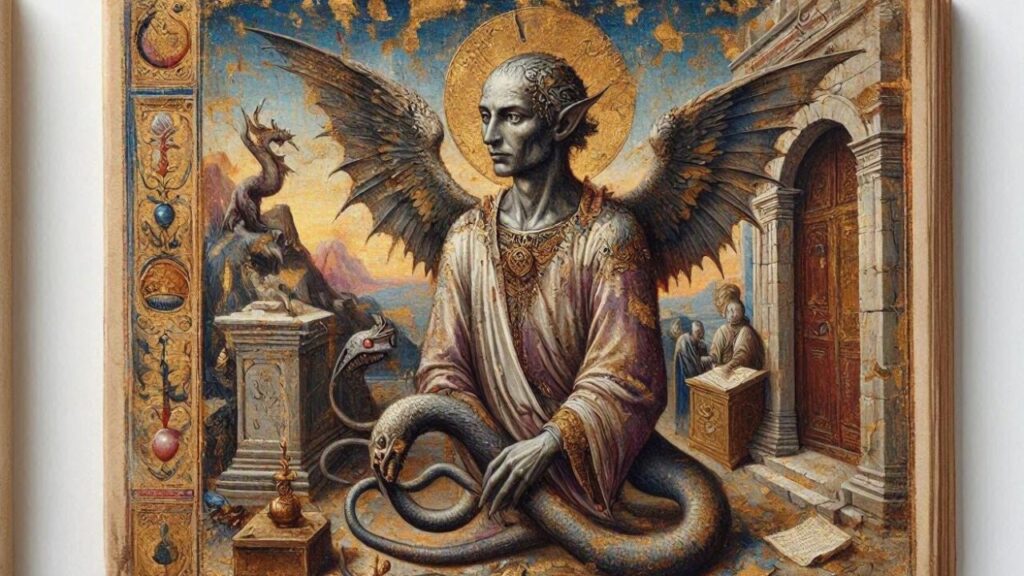
6. What Does the Bible Actually Say About the Devil’s Appearance?
One of the biggest questions surrounding the biblically accurate devil is his physical appearance.
The short answer is that Scripture does not provide a single complete physical description of Satan.
- The Bible does not clearly say that Satan has red skin.
- Scripture does not explicitly give him two horns.
- Scripture does not describe a pitchfork.
- A pointed tail is not presented as a biblical characteristic.
- Hooves are not identified as part of Satan’s appearance.
- A permanent black cloak is not described.
- The familiar cartoon image developed largely through later cultural traditions.
- Revelation uses symbolic imagery such as a dragon and serpent.
- These images communicate spiritual realities and conflict.
- They should not automatically be treated as a photographic description.
- Therefore, claiming that the biblically accurate devil must look exactly like traditional artwork goes beyond what Scripture actually states.
7. The Serpent, Dragon, and Devil: The Powerful Revelation Connection
Revelation 12:9 provides one of the clearest connections between several biblical images.
- The passage refers to the great dragon.
- It also identifies the ancient serpent.
- The same passage names the figure as the devil and Satan.
- The description emphasizes deception.
- The serpent imagery connects the figure with the broader biblical story of evil.
- The dragon imagery communicates power, hostility, and opposition.
- Neither image should automatically be interpreted as a literal portrait of Satan’s everyday physical form.
- Instead, Revelation communicates through apocalyptic symbolism.
- The biblically accurate devil is therefore associated with terrifying symbolic imagery, but symbolism and physical anatomy are not the same thing.
- This distinction prevents readers from confusing biblical symbolism with later fantasy artwork.

8. Does the Bible Say Satan Was an Angel?
This question requires careful interpretation because different biblical passages are often combined in discussions about Satan’s origin.
- The New Testament presents Satan as a spiritual being.
- Scripture also speaks about angels and spiritual powers.
- However, the Bible does not provide one simple biography saying, “Here is exactly how Satan became Satan.”
- Some Christian traditions connect Satan’s origin with passages such as Isaiah 14 and Ezekiel 28.
- Yet those passages directly address the king of Babylon and the king of Tyre in their immediate contexts.
- Their imagery has been interpreted by many Christians as containing deeper connections to Satan.
- Other scholars emphasize the original historical context of those passages.
- Therefore, readers should distinguish explicit biblical statements from later theological interpretation.
- The biblically accurate devil should be discussed carefully rather than presenting debated interpretations as unquestionable facts.
9. The Lucifer Question: 5 Facts You Should Know
The word “Lucifer” creates considerable confusion in discussions about Satan.
- Isaiah 14:12 is traditionally associated with Lucifer in some English Christian traditions.
- The Hebrew expression is commonly connected with the idea of the morning star or shining one.
- The Latin Vulgate used lucifer, meaning “light-bearer” or “morning star.”
- The word itself was not originally a personal name meaning Satan.
- Later Christian tradition strongly connected “Lucifer” with Satan’s pre-fall identity.
- This tradition became influential in Christian literature and art.
- However, the original context of Isaiah 14 concerns the king of Babylon.
- Therefore, readers should be cautious when saying that Isaiah 14 provides a complete biography of the devil.
- The biblically accurate devil cannot be fully reconstructed from the word “Lucifer” alone.
- Context, translation, and theological tradition all matter.

10. Ezekiel 28 and the Debate Over Satan’s Original Glory
Ezekiel 28 is another passage frequently used when discussing Satan’s possible pre-fall condition.
- The chapter directly addresses the ruler of Tyre.
- It uses extraordinary imagery involving beauty, precious stones, Eden, and a cherub.
- Many Christian interpreters have understood these descriptions as reaching beyond the human ruler.
- Others interpret the passage primarily as poetic language about the king of Tyre.
- The text therefore remains an important part of the theological discussion.
- It should not be presented as an undisputed physical description of Satan.
- The biblically accurate devil is sometimes portrayed using the imagery from Ezekiel 28.
- However, readers should recognize the difference between direct description and theological interpretation.
- Scripture’s actual wording should remain more important than later artistic representations.
11. 8 Biblical Images That Explain Satan Better Than Movies Do
The Bible repeatedly uses powerful imagery to describe Satan’s activity.
- Serpent: connected with deception and cunning.
- Dragon: communicates hostility and destructive opposition.
- Roaring lion: emphasizes danger and predatory intent.
- Accuser: highlights his role in accusation.
- Tempter: focuses on his attempts to lead people toward disobedience.
- Deceiver: emphasizes falsehood and manipulation.
- Adversary: presents him as an opponent.
- Ruler of the world: describes his influence within the present fallen order.
- These images are more useful for understanding the biblically accurate devil than simply asking whether he has horns.
- They reveal what Scripture wants readers to understand about his character and actions.
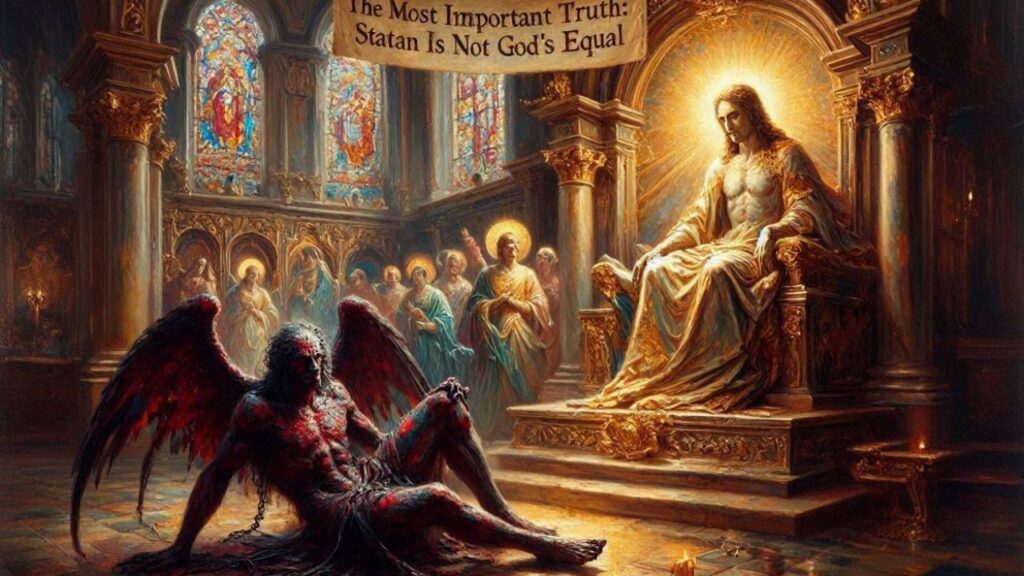
12. The Most Important Truth: Satan Is Not God’s Equal
Popular stories sometimes portray God and Satan as two equal supernatural forces fighting for control.
The Bible presents a very different picture.
- God is the Creator.
- Satan is a created being.
- God possesses ultimate authority.
- Satan’s authority is limited.
- Satan cannot overturn God’s purposes.
- Job demonstrates that Satan operates within boundaries.
- Jesus commands demons with authority.
- Revelation ultimately describes Satan’s defeat.
- Scripture never presents a permanent cosmic balance between God and Satan.
- The biblically accurate devil is therefore powerful but not divine.
- He is an enemy of God, not God’s equal opposite.
- This distinction is central to biblical theology.
13. Satan’s 6 Major Tactics According to Scripture
Scripture describes several recurring patterns associated with Satan.
- Deception: Revelation 12:9 describes him as a deceiver.
- Temptation: Matthew 4 shows him testing Jesus.
- Accusation: Revelation 12 portrays him as an accuser.
- Distortion: In Matthew 4, Scripture itself is misused during temptation.
- Fear and intimidation: 1 Peter 5:8 uses the image of a roaring lion.
- Spiritual opposition: Ephesians 6:11 warns believers about the schemes of the devil.
- These patterns show why the biblically accurate devil is better understood through actions than through physical appearance.
- The Bible repeatedly focuses attention on his influence and strategies.

14. Why Deception Is More Important Than Appearance
The Bible’s emphasis on deception has an important lesson.
- A frightening appearance is easy to recognize.
- Deception can be much harder to detect.
- 2 Corinthians 11:14 says Satan disguises himself as an angel of light.
- This passage is especially important when considering the biblically accurate devil.
- The biblical warning is not simply, “Watch for a monster.”
- Instead, Scripture warns that evil can appear attractive, persuasive, religious, or convincing.
- Therefore, external appearance is not a reliable test of spiritual truth.
- Biblical teaching repeatedly directs believers toward truth, discernment, and faithfulness to God.
15. Can Satan Transform Himself Into an Angel of Light?
Paul’s statement in 2 Corinthians 11:14 is often misunderstood.
- The verse does not mean Satan should literally be imagined as a glowing angel in every encounter.
- Paul uses the image to explain deception.
- The surrounding passage discusses false apostles and misleading spiritual claims.
- The point is that something evil can present itself as good.
- Therefore, appearance alone cannot establish whether something is trustworthy.
- This idea fits the broader biblical portrayal of Satan as a deceiver.
- The biblically accurate devil can therefore be associated with disguise and false appearance.
- Yet Scripture does not provide a detailed visual design for such a disguise.
16. Satan and Demons: 7 Crucial Differences
The terms Satan and demon are often treated as though they mean exactly the same thing.
- Satan is presented as a central adversarial figure.
- Demons are presented as other evil spiritual beings.
- The Gospels describe Jesus confronting demons.
- Satan personally appears in Jesus’ wilderness temptation.
- Revelation gives Satan a distinct identity.
- Scripture does not say that every demon is Satan.
- The biblically accurate devil should therefore not be confused with every demonic spirit.
- Christian theology often describes demons as spiritual beings aligned with Satan.
- However, readers should distinguish what Scripture explicitly says from later detailed demon classifications.
- The Bible gives far less information about individual demon hierarchies than popular demonology often suggests.
17. What the Bible Says About Demons
The New Testament frequently describes demons as unclean or evil spirits.
- Jesus encounters people suffering from demonic oppression.
- Demons recognize Jesus’ authority.
- Jesus commands them to leave.
- In several Gospel accounts, demons respond with fear.
- The disciples also encounter demonic forces.
- Jesus gives His followers authority over demons during His ministry.
- The biblical accounts focus on God’s authority rather than fascination with demon names.
- This is important when studying the biblically accurate devil.
- Scripture consistently directs attention toward God rather than encouraging obsessive curiosity about evil spirits.
18. 10 Bible Verses That Reveal the Devil’s Role
Several passages are especially useful when studying Satan.
- Genesis 3: introduces the serpent in the account of humanity’s fall.
- Job 1–2: presents Satan as an accuser and tester operating within limits.
- Zechariah 3:1–2: depicts Satan as an accuser.
- Matthew 4:1–11: records Satan tempting Jesus.
- John 8:44: describes the devil in relation to falsehood.
- Ephesians 6:11: warns believers about the devil’s schemes.
- 1 Peter 5:8: compares the adversary to a roaring lion.
- 2 Corinthians 11:14: uses the image of Satan disguising himself as an angel of light.
- Revelation 12:9: connects the dragon, serpent, devil, and Satan.
- Revelation 20:10: describes Satan’s final judgment.
- Together, these passages provide a strong biblical framework for understanding the biblically accurate devil.
19. The Garden of Eden: What Genesis Actually Says
Genesis 3 is foundational to Christian discussions about Satan.
- Genesis identifies the creature involved as a serpent.
- The serpent speaks to Eve.
- The serpent questions God’s command.
- The serpent encourages Eve to reconsider God’s warning.
- Eve eats the forbidden fruit.
- Adam also eats.
- The narrative describes the beginning of humanity’s disobedience.
- Revelation later identifies the ancient serpent with the devil and Satan.
- This later biblical connection is important.
- However, Genesis itself does not use the word “Satan” in the chapter.
- The biblically accurate devil is connected with the serpent through the wider biblical canon.
- Readers should therefore distinguish Genesis’ immediate wording from Revelation’s later identification.
20. Why the Horns and Pitchfork Are Not Biblical
The famous devil image has become so familiar that many people assume it comes directly from Scripture.
It does not.
- The Bible does not describe Satan carrying a pitchfork.
- Scripture does not state that Satan has goat-like horns.
- The traditional red color is not a biblical requirement.
- Hooves are not given as part of his anatomy.
- The visual design developed through centuries of art, folklore, literature, and cultural symbolism.
- Some imagery was influenced by pre-Christian figures and later artistic traditions.
- Medieval and Renaissance artists contributed heavily to Western devil imagery.
- Therefore, the biblically accurate devil should not automatically be drawn according to modern cartoon conventions.
21. How Medieval Art Changed the Devil’s Appearance
Western art played a major role in shaping the familiar devil.
- Artists often needed visual symbols to communicate evil quickly.
- Animal-like features became useful artistic shorthand.
- Horns suggested threatening or wild characteristics.
- Hooves connected the figure with animal imagery.
- A tail reinforced the supernatural appearance.
- Red became associated with fire, danger, and hell.
- These artistic choices became increasingly familiar over generations.
- Literature later reinforced many of these visual ideas.
- Modern entertainment continued the tradition.
- As a result, many people now picture the devil through cultural memory rather than biblical text.
- The biblically accurate devil is therefore quite different from the standard Western cartoon figure.
22. Does Satan Have Wings?
The Bible does not clearly provide a direct physical description of Satan’s wings.
- Some traditions imagine Satan as a fallen angel with wings.
- Artistic depictions often show him with large dark wings.
- However, Scripture does not provide a complete anatomical description of Satan after his fall.
- Revelation describes symbolic imagery but does not provide a standard portrait for artists.
- Therefore, winged representations should be understood cautiously.
- The biblically accurate devil may be portrayed in theological artwork with wings, but Scripture does not require that specific design.
- A responsible biblical illustration should avoid presenting artistic assumptions as direct biblical facts.
23. Is the Devil Always Shown as Ugly?
Not according to Scripture.
- 2 Corinthians 11:14 specifically uses the image of an angel of light.
- This emphasizes deceptive appearance.
- The biblical warning is therefore more subtle than “evil always looks ugly.”
- Something can appear attractive while promoting falsehood.
- Something can sound spiritual while contradicting God’s truth.
- This principle makes discernment important.
- Consequently, the biblically accurate devil should not necessarily be represented as physically hideous in every artistic interpretation.
- Scripture places greater emphasis on deception than ugliness.
24. 5 Common Myths About Satan Debunked
Many popular claims about Satan are not stated directly in the Bible.
- Myth 1: Satan rules hell.
- Scripture presents hell as a place of judgment, not Satan’s personal kingdom.
- Revelation 20:10 describes Satan being judged.
- Myth 2: Satan is God’s equal.
- Scripture never gives Satan divine status.
- God remains sovereign.
- Myth 3: Satan always looks like a red monster.
- Scripture does not provide that description.
- Myth 4: Lucifer is unquestionably Satan’s original personal name.
- This depends heavily on later Christian interpretation and translation tradition.
- Myth 5: Every demon is Satan.
- The Bible distinguishes Satan from other evil spirits.
- These corrections help create a more biblically accurate devil discussion.
25. Does Satan Rule Hell?
The common phrase “Satan rules hell” is mainly a cultural idea.
- The Bible does not present Satan sitting on a throne in hell as its ruler.
- Matthew 25:41 speaks of eternal fire prepared for the devil and his angels.
- Revelation 20:10 describes Satan being thrown into the lake of fire.
- The imagery is one of punishment and judgment.
- Satan is not portrayed as the manager of God’s place of judgment.
- Therefore, the biblically accurate devil is not the king of hell.
- This popular idea owes more to cultural storytelling than to direct biblical teaching.
26. Satan’s Power Has Clear Biblical Limits
Scripture consistently shows limits around Satan’s activity.
- Job demonstrates that Satan operates within boundaries.
- Jesus rejects Satan’s temptations.
- Demons recognize Christ’s authority.
- Satan cannot prevent God’s ultimate plan.
- Revelation presents his eventual defeat.
- Ephesians 6 encourages believers to stand against his schemes.
- James 4:7 tells believers to resist the devil.
- These passages emphasize resistance rather than helplessness.
- The biblically accurate devil is dangerous, but Scripture does not portray believers as powerless against evil.
- God’s authority remains greater.
27. Can Satan Read Your Mind?
The Bible does not explicitly state that Satan can read human thoughts.
- Scripture describes Satan as observant and deceptive.
- He may exploit behavior, weakness, temptation, and circumstances.
- However, the Bible does not clearly teach that Satan possesses God’s unique ability to know every human thought.
- Omniscience belongs to God.
- Therefore, Christians should avoid presenting mind-reading as an established biblical fact.
- The biblically accurate devil should be understood according to what Scripture actually reveals.
- This approach prevents speculation from becoming doctrine.
28. Can Satan Hear Your Prayers?
Scripture does not give a simple statement saying Satan hears every private prayer.
- The Bible encourages believers to pray directly to God.
- God knows human hearts and thoughts.
- Scripture does not focus on whether Satan can hear private conversations.
- Therefore, Christians should not build fear around an ability Scripture never clearly attributes to him.
- The important biblical focus is trust in God.
- Prayer is presented as communication with God, not as a contest with Satan.
- This perspective keeps the biblically accurate devil in his proper theological position.
29. Why Christians Should Not Become Obsessed With Satan
The Bible acknowledges Satan’s activity but does not encourage constant fascination with him.
- Scripture repeatedly points believers toward God.
- Jesus remains the central figure of the New Testament.
- Christian teaching emphasizes faith, obedience, love, truth, and spiritual endurance.
- Ephesians 6 discusses spiritual warfare but focuses on the armor of God.
- James 4 emphasizes submitting to God and resisting the devil.
- Therefore, studying the biblically accurate devil should ultimately increase biblical understanding rather than fear or obsession.
- The goal is discernment, not fascination.
30. The Armor of God Provides 6 Powerful Defenses
Ephesians 6:10–18 provides a famous description of spiritual armor.
- Belt of truth: emphasizes commitment to truth.
- Breastplate of righteousness: represents righteous living.
- Shoes of readiness: connects believers with the gospel of peace.
- Shield of faith: represents trust in God.
- Helmet of salvation: emphasizes confidence in salvation.
- Sword of the Spirit: identifies God’s Word as a weapon.
- This passage does not encourage Christians to study Satan more than Scripture.
- Instead, it tells believers how to stand firm.
- The biblically accurate devil is therefore presented as an opponent against whom spiritual steadfastness matters.
31. Satan’s Relationship With Human Temptation
The Bible presents temptation as a serious spiritual issue.
- Satan tempted Jesus directly.
- Scripture also describes human desires as sources of temptation.
- James 1:14–15 explains how people can be drawn away by their own desires.
- Therefore, not every temptation should automatically be blamed on Satan.
- Human responsibility remains important.
- This creates a balanced understanding of spiritual warfare.
- The biblically accurate devil can tempt and deceive, but Scripture also holds individuals responsible for their choices.
- Christians are therefore called to resist evil while examining their own hearts.
32. What Revelation Says About Satan’s Final Defeat
Revelation gives the clearest picture of Satan’s final judgment.
- Revelation 12 describes conflict involving the dragon.
- Revelation 20 describes Satan’s ultimate defeat.
- The devil is thrown into the lake of fire.
- His judgment is presented as final.
- The narrative does not end with an eternal battle between equal powers.
- Instead, God’s judgment establishes the final outcome.
- This is one of the most important theological truths about the biblically accurate devil.
- Satan’s story does not end with victory.
- Scripture presents his ultimate defeat as certain within its prophetic vision.
33. 7 Major Differences Between the Biblical Devil and Popular Culture
Popular culture often changes the biblical picture.
- Bible: Satan is an adversary.
- Culture: Satan is often portrayed as a humorous villain.
- Bible: Satan deceives.
- Culture: Satan frequently appears physically obvious.
- Bible: Satan is not God’s equal.
- Culture: stories sometimes portray equal supernatural opponents.
- Bible: Satan faces judgment.
- Culture: he may be shown as ruler of an underworld.
- Bible: symbolism is common.
- Culture: symbolism becomes literal anatomy.
- Bible: Scripture emphasizes spiritual conflict.
- Culture: entertainment emphasizes visual spectacle.
- These differences explain why the biblically accurate devil may look very different from familiar fictional portrayals.
34. What the Devil Is Not According to Scripture
Understanding what Scripture does not say can be just as useful as studying what it does say.
- Satan is not God.
- Satan is not omnipotent.
- Satan is not omniscient in the same sense as God.
- Satan is not presented as the ruler of hell.
- Satan is not described with a mandatory pitchfork.
- Satan is not explicitly given a red body.
- Satan is not identified as every demon.
- Satan is not presented as the eternal opposite of God.
- Satan does not ultimately win.
- These distinctions help keep the biblically accurate devil grounded in Scripture rather than folklore.
35. 10 Powerful Lessons Christians Can Learn From the Biblical Devil
Studying Satan can reveal important lessons about Christian life.
- Truth matters: deception is repeatedly connected with Satan.
- Temptation can sound reasonable: Jesus’ temptation involved distorted reasoning.
- Scripture requires understanding: Satan’s temptation included misuse of Scripture.
- Pride is dangerous: biblical narratives repeatedly warn against rebellion.
- Discernment matters: evil does not always appear obviously evil.
- God remains sovereign: Satan’s authority is limited.
- Resistance is possible: believers are instructed to resist evil.
- Faith is essential: Ephesians connects spiritual warfare with faith.
- Prayer matters: Jesus teaches His followers to pray against temptation.
- Hope remains: Scripture points toward the ultimate defeat of evil.
- These lessons make the study of the biblically accurate devil practical rather than merely theoretical.
36. Biblical Devil vs Traditional Devil: Quick Comparison
| Feature | Biblical Description | Traditional Popular Image |
| Main identity | Adversary and deceiver | Horned monster |
| Main activity | Temptation and accusation | Ruling an underworld |
| Appearance | Not fully described | Red body and horns |
| Weapons | No pitchfork specified | Pitchfork |
| Residence | Not described as ruling hell | Hell |
| Authority | Limited | Often exaggerated |
| Symbolism | Serpent and dragon | Goat-like figure |
| Final outcome | Judgment | Often treated as eternal ruler |
This comparison shows why the biblically accurate devil cannot simply be copied from traditional Halloween imagery.- The biblical account focuses on identity, actions, deception, and judgment.
37. A Simple 5-Step Method for Studying Satan Biblically
If you want to study this subject responsibly, use a context-first approach.
- Step 1: Read the complete passage.
- Do not rely on one isolated verse.
- Step 2: Identify the original audience.
- Ask who the passage addresses.
- Step 3: Separate direct statements from interpretation.
- Mark what the text explicitly says.
- Step 4: Compare related passages.
- Study Job, the Gospels, the Epistles, and Revelation together.
- Step 5: Avoid cultural assumptions.
- Do not automatically treat artwork as Scripture.
- This method creates a stronger understanding of the biblically accurate devil.
- It also helps prevent common theological misunderstandings.
38. Why Context Matters When Reading Isaiah 14 and Ezekiel 28
Two passages frequently appear in discussions about Satan.
- Isaiah 14 addresses the king of Babylon.
- Ezekiel 28 addresses the ruler of Tyre.
- Both passages use powerful poetic imagery.
- Christian interpreters have historically connected some of that imagery with Satan.
- However, the immediate historical context remains important.
- Readers should not ignore the original audience.
- At the same time, Christians may study how later biblical theology develops themes of pride, rebellion, and judgment.
- This balanced approach is better than claiming every detail is an explicit biography.
- The biblically accurate devil should therefore be studied with both literary context and theological history in mind.
39. Is the Devil a Fallen Angel? The Balanced Answer
Many Christians answer yes, but the details require nuance.
- Scripture describes Satan as a spiritual adversary.
- Christian theology has traditionally understood him as a fallen angelic being.
- Passages about angels, rebellion, and spiritual powers contribute to this understanding.
- However, Scripture does not provide a single chapter containing Satan’s complete origin story.
- The phrase “fallen angel” is therefore a theological summary rather than a complete biblical biography.
- Different Christian traditions explain the relevant passages differently.
- A careful article about the biblically accurate devil should acknowledge that distinction.
- Doing so makes the discussion more accurate and trustworthy.
40. 8 Questions That Separate Scripture From Popular Myth
- Does Satan have horns?
- Scripture does not explicitly say so.
- Does Satan have a tail?
- Scripture does not explicitly describe one.
- Does Satan rule hell?
- Scripture presents him as facing judgment.
- Is Lucifer definitely Satan’s original name?
- The identification depends heavily on tradition and interpretation.
- Is Satan God’s equal?
- No. Scripture presents God as sovereign.
- Is Satan every demon?
- No. Biblical texts distinguish Satan from other evil spirits.
- Can Satan do anything he wants?
- No. Job demonstrates limits on his activity.
- Will Satan win?
- Revelation presents his ultimate judgment and defeat.
41. The Most Accurate Way to Describe Satan’s Appearance
If someone asks you to create an image of a biblically accurate devil, the safest biblical approach is not to invent a detailed anatomy and call it Scripture.
- Use symbolic imagery when representing Revelation.
- A serpent can represent the ancient serpent.
- A dragon can represent Revelation’s symbolic imagery.
- An accuser can be represented through courtroom symbolism.
- An angelic or spiritual form may reflect theological traditions, but should be labeled interpretive.
- Avoid claiming horns, red skin, hooves, or a pitchfork are directly biblical.
- Make clear when an image is artistic rather than explicitly described in Scripture.
- This approach preserves both visual creativity and biblical accuracy.
42. Biblical Imagery Is Often Symbolic for a Reason
Apocalyptic and prophetic books frequently use vivid imagery.
- Revelation contains beasts, dragons, stars, crowns, horns, seals, and symbolic numbers.
- These images communicate theological meaning.
- They are not always intended as literal biological descriptions.
- Therefore, readers should ask what an image represents.
- The dragon communicates powerful opposition.
- The serpent communicates deception and connects with earlier biblical imagery.
- The biblically accurate devil is therefore best understood through the meaning of these images rather than through literal artistic anatomy alone.
43. 6 Powerful Bible Passages for Further Study
For a deeper study, begin with these passages.
- Genesis 3 — the serpent and humanity’s fall.
- Job 1–2 — Satan as accuser and tester.
- Zechariah 3:1–2 — Satan’s accusing role.
- Matthew 4:1–11 — temptation of Jesus.
- Ephesians 6:10–18 — spiritual warfare and God’s armor.
- Revelation 12 and 20 — Satan’s identity, conflict, and final judgment.
- Read each passage in its complete context.
- Compare translations when wording creates confusion.
- Consider historical and literary context before forming conclusions.
- These passages provide a strong foundation for understanding the biblically accurate devil.
44. Internal Link Suggestions for a Bible-Themed Website
A strong article should connect naturally with related content on your website.
- Bible Verses About Spiritual Warfare
- Link when discussing Ephesians 6.
- Powerful Morning Prayers
- Link when discussing prayer and resisting temptation.
- Bible Verses About Protection
- Link when discussing God’s protection.
- Bible Verses About Fear
- Link when discussing spiritual fear and courage.
- Bible Verses About Evil
- Link when discussing Satan’s role.
- What Does the Bible Say About Angels?
- Link when discussing Satan’s possible angelic origin.
- What Does the Bible Say About Demons?
- Link when comparing demons and Satan.
- Bible Verses About God’s Power
- Link when explaining why Satan is not God’s equal.
- Use descriptive anchor text rather than repeatedly linking with the exact focus keyword.
- Add only links to pages that genuinely support the surrounding topic.
45. External Authority Source Suggestions
For additional credibility, link readers to authoritative biblical and academic resources.
- Bible Gateway can be useful for reading multiple Bible translations.
- BibleProject offers educational resources about biblical themes.
- Encyclopaedia Britannica can provide historical context for terms and traditions.
- Early Christian writings and theological reference works can help explain how ideas about Satan developed.
- When citing external sources, prioritize reputable organizations, academic publications, and recognized biblical scholarship.
- Avoid low-quality websites that present speculation as established biblical fact.
- Authority links should support your explanation rather than replace Scripture itself.
- The strongest source for claims about the biblically accurate devil remains the biblical text itself.
46. 12 Original Shareable Biblical Blessings and Reflections
- May God give you wisdom to recognize truth when deception appears.
- May your heart remain anchored in God’s Word during every temptation.
- May God’s peace replace fear whenever you face spiritual opposition.
- May you stand firm in faith when circumstances feel overwhelming.
- May God’s truth guide every decision you make today.
- May you find courage to resist what pulls you away from God.
- May your prayers become stronger through deeper trust in the Lord.
- May God’s protection surround your heart and mind.
- May you walk in wisdom instead of fear.
- May your faith remain steady when life becomes difficult.
- May God’s light guide you away from deception.
- May you remember that evil does not have the final word.
- These messages can work well as social media captions, prayer posts, or inspirational graphics.
- They also complement articles about biblical protection, spiritual warfare, and faith in difficult times.
47. What Scripture Ultimately Wants You to Remember
The Bible does not present Satan as the central hero or villain of its entire story.
- Scripture’s central message is about God, His creation, humanity, redemption, judgment, and restoration.
- Satan appears as an adversary within that larger story.
- His actions are serious.
- His influence is real within the biblical narrative.
- Yet his authority remains limited.
- His deception does not defeat God’s truth.
- His opposition does not cancel God’s purposes.
- His final outcome is judgment.
- Therefore, studying the biblically accurate devil should ultimately point readers back toward God’s authority.
- The subject becomes most useful when it produces discernment, not fear.
48. The Biggest Difference Between Satan and God
The difference is not simply that one is good and one is evil.
- God is the Creator.
- Satan is part of creation.
- God is sovereign.
- Satan operates within limits.
- God represents truth.
- Satan is associated with deception.
- God gives life.
- Satan is associated with destruction and opposition.
- God judges evil.
- Satan faces judgment.
- God is eternal.
- Satan’s final defeat is presented in Scripture.
- This contrast is essential for understanding the biblically accurate devil without giving him a status Scripture does not give him.
49. How to Explain the Devil to Someone Who Has Never Read the Bible
A simple explanation can make this complicated subject easier to understand.
- Start by saying that Satan is described as an adversary.
- Explain that the Bible associates him with temptation and deception.
- Mention that Scripture uses titles such as devil, Satan, tempter, and accuser.
- Explain that the Bible uses symbolic images such as a serpent and dragon.
- Clarify that horns and a pitchfork come from cultural imagery.
- Explain that Satan is not God’s equal.
- Mention that Scripture presents his ultimate defeat.
- Avoid unnecessary speculation about physical details.
- This gives beginners a much more biblically accurate devil explanation.
50. The Powerful Final Picture: Who Is the Biblical Devil?
When all the major passages are considered together, the biblical picture becomes clearer.
- Satan is an adversary.
- The devil is associated with accusation.
- He is described as a tempter.
- He is connected with deception.
- He opposes God’s purposes.
- He influences and tests people within the biblical narrative.
- His authority is limited.
- He is not equal to God.
- Scripture uses serpent and dragon imagery.
- His physical appearance is not comprehensively described.
- Popular horns, hooves, red skin, and pitchforks are not required by Scripture.
- Christian tradition has added many visual details over the centuries.
- The New Testament places strong emphasis on resisting deception.
- Revelation presents his final judgment.
- Therefore, the biblically accurate devil is best understood as a powerful but limited spiritual adversary whose defeat is ultimately certain.
FAQs
What does the Bible say the devil actually looks like?
The Bible does not provide one complete physical portrait of Satan. It uses several images, including the serpent, dragon, and the idea of an angel of light. These descriptions communicate spiritual qualities and deception. Scripture does not explicitly require the traditional red skin, horns, hooves, tail, or pitchfork commonly associated with the devil.
Is the biblically accurate devil the same as Satan?
Yes. In the New Testament, “devil” and “Satan” are used for the same central adversarial figure. The Greek word diabolos emphasizes the idea of a slanderer or accuser, while Satan carries the meaning of an adversary. Revelation 12:9 directly connects the devil and Satan with the ancient serpent and dragon.
Does the Bible say Satan has horns?
No. Scripture does not explicitly describe Satan as having horns. Horned depictions developed through later artistic and cultural traditions. Revelation does use horns in symbolic imagery involving various figures, but those passages should not automatically be interpreted as a literal anatomical description of Satan.
Is Lucifer the biblical name of Satan?
The answer requires context. The term “Lucifer” became strongly associated with Satan through Latin translation and Christian tradition. Isaiah 14:12, however, originally appears within a passage addressing the king of Babylon. Many Christians have interpreted the passage typologically or theologically in relation to Satan, but it should not be treated as an undisputed statement that Lucifer was Satan’s original personal name.
Does Satan rule hell?
No. The Bible does not portray Satan as the king or ruler of hell. Instead, passages such as Matthew 25:41 and Revelation 20:10 present the devil as facing divine judgment. The popular picture of Satan sitting on a throne in hell comes largely from cultural and literary traditions rather than direct biblical teaching.
Is Satan God’s equal?
No. Scripture does not present God and Satan as equal supernatural powers. God is the Creator and sovereign authority. Satan is an adversary whose activity has limits. The account in Job illustrates those limitations, while Revelation presents his eventual defeat and judgment.
Are Satan and demons the same thing?
No. The Bible distinguishes Satan from other evil or unclean spirits. Satan is presented as a central adversarial figure, while demons appear as other spiritual beings opposing God’s purposes. Scripture does not identify every demon as Satan.
Can Satan read people’s minds?
The Bible does not explicitly teach that Satan can read every human thought. Satan is portrayed as deceptive, observant, and influential, but omniscience belongs uniquely to God. Claims about Satan’s ability to read minds should therefore not be presented as established biblical teaching.
Why does the devil look different in movies?
Movies and artwork often use centuries of cultural symbolism. Horns, red skin, hooves, tails, pitchforks, and dramatic costumes became visual shortcuts for evil. These features make the character instantly recognizable, but they are not presented together as Satan’s physical description in Scripture.
What is the most important lesson about Satan?
The most important lesson is not what Satan looks like. Scripture emphasizes truth, discernment, resistance to temptation, faith, and God’s authority. Christians are repeatedly encouraged to stand firm rather than live in fear. The biblical story ultimately presents evil as defeated under God’s judgment.
Conclusion
The biblically accurate devil is far more complex than the familiar horned character found in popular culture. Scripture presents Satan as an adversary, accuser, tempter, deceiver, and spiritual opponent. At the same time, the Bible does not give a complete physical portrait that supports every traditional artistic detail.
The Bible’s focus is therefore not on designing Satan’s face or body. Its focus is on understanding his tactics, recognizing deception, resisting temptation, and trusting God’s authority. Scripture also makes an important distinction between Satan and God: Satan is powerful within the biblical narrative, but he is never God’s equal.
Ultimately, the biblical message is one of hope. Satan’s opposition does not overcome God’s purposes. Revelation presents his final judgment, while the teachings of Jesus and the apostles call believers toward truth, faith, wisdom, and spiritual endurance.
For that reason, the most useful way to study the biblically accurate devil is through Scripture itself. When biblical passages are read in context, the picture becomes clearer: Satan is an enemy, but not the ultimate authority. Evil is real, deception is dangerous, but God’s sovereignty remains greater.

welcome to blessnexa I am Muhammad inam an ai powered seo and content writer with 4 years of experienceI help website rank higher , grow traffic ,and look amazing ,my goal is to make SEO and web design simple andeffective for everyone .lets achieve more togather