
The fajr prayer is the first obligatory prayer of the Islamic day. It begins before sunrise, when the darkness of night gives way to the first light of dawn. For many Muslims, this quiet time offers a special opportunity to worship Allah before the demands of the day begin.
Understanding the fajr prayer involves more than learning its rakats or memorizing its steps. It also means understanding its timing, spiritual importance, preparation, and the habits that can make waking for it easier. With the right routine, praying at dawn can become a steady and meaningful part of daily life.
This guide explains the essentials in simple language. It covers the correct prayer time, number of rakats, preparation, general method, common questions, practical wake-up strategies, and selected blessings that can be shared with family and friends.
What Is Fajr Prayer? A Simple Explanation for Beginners
- Fajr prayer is the obligatory dawn prayer performed by Muslims each day.
- It is one of the five daily obligatory prayers in Islam.
- Its time begins with true dawn, known as al-fajr al-sadiq.
- Its prayer time continues until sunrise.
- The obligatory portion consists of two fard rakats.
- Many Muslims also perform two sunnah rakats before the two obligatory rakats.
- The prayer is performed before the sun rises, making accurate local prayer times important.
- Because dawn changes throughout the year, the exact clock time differs from one location and season to another.
- Fajr marks the beginning of the daily prayer cycle.
- It also provides a peaceful opportunity to begin the day with remembrance and worship.
- The word “fajr” refers to dawn or daybreak.
- In Islamic terminology, it commonly refers to the dawn prayer and its prescribed time.
- The Quran refers to the dawn period in connection with worship and prayer.
- Surah Al-Isra 17:78 specifically mentions the Quran of dawn, understood in connection with Fajr.
- The prayer therefore carries both a practical and spiritual place in the Muslim daily routine.
- For someone learning Islam or returning to regular salah, understanding this prayer can provide a strong foundation for building a consistent prayer schedule.
Why Fajr Prayer Holds Special Importance in Islam
- The fajr prayer is obligatory, so maintaining it is part of fulfilling the daily salah.
- It takes place at a unique point in the day when the surroundings are often quiet.
- Muslims who wake for worship during this period may experience a strong sense of discipline and spiritual focus.
- The Prophet Muhammad ﷺ emphasized the importance of the dawn and evening prayers in authentic hadith.
- Sahih Muslim reports a narration concerning the angels who attend the Fajr and Asr prayers.
- This narration highlights the honored status associated with these two prayers.
- Another authentic narration in Sahih al-Bukhari and Sahih Muslim describes the two rakats before Fajr as better than the world and everything in it.
- These narrations help explain why Muslims often give special attention to the dawn prayer and its sunnah.
- The importance of Fajr should not, however, become a source of despair for someone who struggles to wake up.
- Instead, practical preparation, sincere intention, and consistent effort can help establish the habit.
- A person should also remember that Islamic worship is based on sincere devotion rather than simply completing a routine mechanically.
- The quiet setting of dawn can make the prayer feel particularly focused.
- There are fewer daytime distractions.
- Phones, work, traffic, meetings, and household responsibilities have usually not yet begun.
- This makes the early morning a valuable opportunity for reflection and worship.
- The prayer also teaches Muslims to place worship among the first priorities of the day.
- Over time, that routine can influence how the rest of the morning begins.
Fajr Meaning: What Does the Word Really Mean?
- The Arabic word “fajr” refers to dawn or daybreak.
- It is associated with the emergence of morning light.
- In Islamic usage, Fajr identifies the dawn prayer and the beginning of its prescribed time.
- The concept of dawn is important because Islamic prayer times follow observable signs in the daily movement of light and darkness.
- True dawn differs from an earlier appearance of light in the sky.
- Islamic jurists discuss these signs when explaining prayer times.
- The beginning of true dawn marks the opening of the Fajr prayer period.
- Sunrise then marks the end of its normal time.
- Therefore, a prayer timetable is more useful than simply assuming that the prayer begins at a fixed clock hour every day.
- In summer, dawn may arrive very early.
- In winter, it may arrive later.
- The exact difference depends on geographic location and date.
- Understanding this meaning also helps explain why the word Fajr appears in discussions about dawn, morning, and worship.
- It is both a description of a natural phenomenon and the name commonly used for the dawn salah.
7 Powerful Spiritual Benefits of Fajr Prayer
- Regular Fajr can strengthen a person’s daily connection with Allah.
- Beginning the morning with salah can create a deliberate pause before worldly responsibilities take over.
- The prayer can remind a Muslim that the new day is an opportunity for gratitude, repentance, and purposeful action.
- It can also reinforce consistency because the prayer occurs at a fixed and demanding time.
- Waking before sunrise requires planning and self-discipline.
- That effort can encourage a broader habit of keeping commitments.
- The quiet atmosphere can support reflection.
- A person may use the moments around prayer for dhikr, Quran recitation, dua, or silent contemplation.
- Fajr also reminds believers that worship does not depend on convenience.
- The willingness to rise while others are still sleeping can become an expression of devotion.
- The prayer can establish a spiritually focused starting point for the day.
- It may also encourage Muslims to organize their sleep schedule more responsibly.
- When Fajr becomes a priority, staying awake excessively late may become less attractive.
- A healthier nighttime routine can therefore support morning worship.
- Most importantly, the spiritual benefit of salah comes from sincere worship and obedience to Allah.
- The prayer should not be reduced to a productivity technique.
- Its central purpose remains worship.
5 Meaningful Ways Fajr Can Shape Your Morning Routine
- Fajr can encourage a person to wake at a consistent time.
- A predictable morning routine can make the beginning of the day less rushed.
- Preparing clothes, prayer space, alarm settings, and water before sleeping can reduce morning decisions.
- After salah, some people choose to remain awake for Quran reading or quiet reflection.
- Others may return to sleep when their schedule requires it.
- A person can build the morning around priorities rather than immediately checking notifications.
- Avoiding the phone immediately after waking can help protect attention.
- Drinking water and completing simple morning tasks can follow naturally.
- A short period of dhikr can provide a peaceful transition into the day.
- The goal should be consistency rather than creating an unnecessarily complicated routine.
- Even a simple routine can become meaningful when it is maintained with sincerity.
- Fajr can therefore serve as an anchor around which the rest of the morning is organized.
Fajr Prayer Time: When Does It Begin and End?
- The time for Fajr begins with true dawn.
- It ends when the sun rises.
- This means the prayer must normally be completed before sunrise.
- The exact clock time changes according to date and location.
- Muslims should therefore use a reliable local prayer timetable or trusted mosque schedule.
- Weather and visibility can affect what a person observes outdoors.
- Modern prayer calendars use astronomical calculations to estimate the relevant times.
- Different calculation methods can sometimes produce slightly different Fajr times.
- This is one reason local mosque timetables may differ by several minutes from another app or website.
- When following a particular school of Islamic jurisprudence, a person may choose the calculation method recommended by trusted local scholars.
- The important point is that Fajr is connected to true dawn rather than a universal clock time.
- Sunrise is equally important because it marks the end of the ordinary Fajr period.
- If someone is unsure about local timing, asking a qualified local scholar or established mosque can help resolve the issue.
- Prayer apps can be useful, but their settings should be checked.
- Location, calculation method, daylight-saving settings, and time-zone information can affect displayed times.
- A Muslim should avoid assuming that one fixed time works throughout the year.
- The prayer timetable should be checked regularly, especially when seasons change.
2 Essential Rakats: How Many Rakats Are in Fajr Prayer?
- The obligatory Fajr prayer consists of two fard rakats.
- Before those two fard rakats, Muslims commonly pray two sunnah rakats associated with Fajr.
- This means a person who performs both the sunnah and obligatory prayer normally completes four rakats in total.
- The two fard rakats are the obligatory component.
- The two sunnah rakats are highly emphasized in Sunni Islamic tradition.
- Authentic hadith emphasize the special virtue of the two sunnah rakats before Fajr.
- It is important to distinguish the sunnah rakats from the obligatory rakats.
- Someone asking, “How many rakats is Fajr?” is usually asking about the two obligatory rakats.
- Someone asking about the complete customary prayer before sunrise may be referring to the two sunnah followed by two fard.
- Details of prayer practice can differ among Islamic schools.
- New Muslims should therefore learn the method from a reliable teacher, mosque, or recognized Islamic educational source.
- The basic distinction between two sunnah rakats and two obligatory rakats remains useful for beginners.
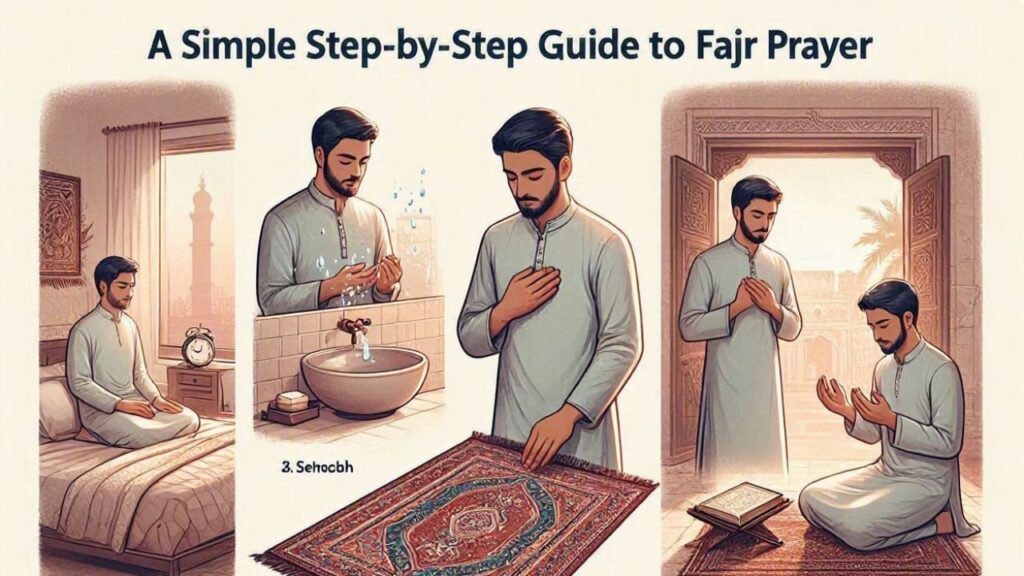
A Simple Step-by-Step Guide to Fajr Prayer
- Begin by making sure the prayer time has entered.
- Perform wudu if you are not already in a state of purification.
- Wear clean and appropriate clothing.
- Choose a clean place for prayer.
- Face the Qiblah.
- Make the intention for the prayer in your heart.
- Begin the prayer with takbir.
- Follow the established sequence of standing, recitation, bowing, prostration, and sitting.
- Complete the first rakat according to the method you have learned.
- Stand for the second rakat.
- Recite the required Quranic passages.
- Complete ruku and sujood.
- Sit for the final tashahhud.
- End the prayer with salam.
- The exact wording and details should be learned from a reliable Islamic teacher or authentic prayer guide.
- Beginners should focus first on learning the essential sequence correctly.
- They can gradually improve pronunciation, recitation, and understanding.
- There is no need to become discouraged by mistakes made while learning.
- Consistent practice usually improves confidence and accuracy.
How to Perform the Two Sunnah Rakats Before Fajr
- Make the intention for the two sunnah rakats of Fajr.
- Perform them before the obligatory two rakats.
- Follow the normal structure of a two-rakat prayer.
- Recite Surah Al-Fatihah in each rakat.
- Add Quranic recitation according to the established practice you follow.
- Complete ruku and sujood in the normal sequence.
- Finish the prayer with the final sitting and salam.
- The Prophet Muhammad ﷺ gave special importance to these two rakats.
- A well-known hadith in Sahih Muslim states that the two rakats before Fajr are better than the world and everything in it.
- This does not mean that Muslims should treat worship as a material transaction.
- Rather, the narration communicates the exceptional value attached to this sunnah.
- A person should perform it with sincerity and understanding.
- Those learning should follow a trusted teacher for precise details of posture and recitation.
What to Recite During Fajr Prayer
- Surah Al-Fatihah is recited in each rakat of the obligatory prayer.
- Additional Quranic recitation is included according to the established method of the prayer.
- Longer recitation is associated with Fajr in several prophetic traditions.
- The Prophet ﷺ is reported to have recited longer portions of the Quran in Fajr on some occasions.
- This does not mean every person must recite long passages.
- Someone who knows only shorter surahs can use the portions they have memorized.
- Beginners should focus on accurate recitation of what they know.
- Learning additional surahs gradually can increase confidence.
- Understanding the meaning of frequently recited verses can also deepen concentration.
- The purpose of Quran recitation is worship and remembrance rather than simply completing a checklist.
- Muslims should follow the recitation practices taught by reliable scholars within their tradition.

6 Practical Steps to Wake Up for Fajr Consistently
- Set more than one alarm if you regularly sleep through the first alarm.
- Place the alarm far enough away that you must get out of bed.
- Go to sleep earlier instead of relying entirely on alarms.
- Reduce late-night screen use before bedtime.
- Ask a family member or trusted friend to call you when necessary.
- Prepare your prayer clothes and wudu area before sleeping.
- Keep the room comfortable but avoid creating conditions that encourage oversleeping.
- Make a sincere intention before going to sleep.
- Avoid heavy meals immediately before bedtime when they disturb your sleep.
- Keep a consistent sleep schedule whenever possible.
- If you live with family members who also pray, coordinate wake-up routines.
- Use a reliable prayer application with the correct location and calculation settings.
- Check the sunrise time as well as the Fajr start time.
- Avoid staying awake late simply because the next morning feels far away.
- Remember that successful routines usually depend more on preparation than motivation.
Why Sleeping Early Can Make Fajr Easier
- Many people struggle with Fajr because their sleep schedule begins too late.
- An alarm cannot fully solve a lifestyle that repeatedly deprives the body of adequate sleep.
- Going to bed earlier gives the body more opportunity to rest before dawn.
- A consistent bedtime can also make waking at a similar hour easier.
- Reducing bright screens before bed may help create a calmer transition toward sleep.
- Caffeine late in the day can interfere with sleep for some people.
- A calmer evening routine can therefore support morning worship.
- Preparing everything before bedtime removes unnecessary obstacles.
- The aim is not perfection.
- Instead, create conditions that make the desired behavior easier.
- Over several weeks, waking for Fajr can become more familiar.
- If someone works night shifts or has unusual hours, their routine may need different planning.
- The essential principle remains the same: protect sufficient rest while prioritizing the prayer time.
8 Common Mistakes That Can Make Fajr Difficult
- Going to bed without checking the next morning’s prayer time.
- Setting an alarm but placing the phone within immediate reach.
- Staying on social media late into the night.
- Assuming one alarm will always be enough.
- Ignoring changing seasonal prayer times.
- Sleeping without making a realistic plan for waking.
- Treating one missed prayer as a reason to abandon the routine.
- Depending entirely on motivation instead of establishing practical habits.
- These problems are common and can usually be addressed gradually.
- A person who misses Fajr should not use the setback as an excuse to give up on future prayers.
- Instead, they can identify what caused the problem and change the routine.
- If oversleeping happens unintentionally, Islamic rulings concerning making up the prayer should be learned from a qualified scholar.
- Deliberately neglecting a prayer is a different matter from unintentionally sleeping through it.
- Because details can vary depending on circumstances and jurisprudential school, personal religious questions should be directed to qualified scholars.
Fajr Prayer and the First Light of the Day
- Dawn creates a natural transition between night and day.
- Fajr takes place during this transition.
- This makes the prayer visually and emotionally distinctive.
- The darkness gradually changes as daylight approaches.
- The quiet environment can help some worshippers concentrate.
- Birds, natural light, and the stillness of early morning can create a peaceful setting.
- Yet the value of the prayer does not depend on the atmosphere.
- Its primary significance comes from obedience and worship.
- The changing sky can simply remind a person of the order and regularity of creation.
- Beginning the day with gratitude can also influence one’s mindset.
- A Muslim may use the time after prayer for Quran reading, dhikr, dua, or useful planning.
- This creates a deliberate space before the day’s responsibilities begin.

9 Powerful Benefits of Building a Fajr Routine
- A regular Fajr routine can strengthen consistency in daily worship.
- It can encourage earlier and more organized sleep habits.
- It may reduce the tendency to begin every morning in a rushed state.
- It creates a dedicated period for worship before daily distractions increase.
- It can encourage regular Quran recitation.
- It can make morning dhikr easier to maintain.
- It provides a natural moment for personal dua.
- It teaches patience because building the habit requires repeated effort.
- It can strengthen a person’s awareness of the five daily prayers as a complete system.
- These benefits should not be confused with medical or guaranteed psychological outcomes.
- Every person’s experience is different.
- The central purpose remains worshipping Allah and fulfilling the obligation of salah.
- Any additional personal benefits should be viewed as possible effects of a disciplined spiritual routine rather than guaranteed results.
Fajr Prayer and Mental Focus: What Should You Expect?
- A quiet morning can feel more peaceful than a busy afternoon.
- Some people find it easier to concentrate before messages, work, and other responsibilities begin.
- Prayer also provides a structured period of attention.
- However, Muslims should not approach salah only as a mental performance technique.
- The purpose of prayer is worship.
- Personal feelings can change from one day to another.
- Some mornings may feel deeply peaceful.
- Other mornings may feel difficult because of tiredness, stress, or distraction.
- Consistency matters even when emotions fluctuate.
- Developing khushu involves learning to focus on the meaning and purpose of worship.
- Understanding what is being recited can help improve concentration.
- Slowing down instead of rushing can also help.
- Removing unnecessary distractions from the prayer area may be useful.
- Over time, familiarity with the prayer can make the movements and recitation feel more natural.
A Useful Fajr Preparation Checklist for Every Night
- Check tomorrow’s Fajr time.
- Check the sunrise time.
- Set one or more alarms.
- Place the alarm away from the bed if needed.
- Prepare suitable prayer clothing.
- Keep the prayer area clean.
- Charge the phone if it is being used as an alarm.
- Avoid unnecessary late-night screen time.
- Make a sincere intention to wake for prayer.
- Plan bedtime according to the required wake-up time.
- If necessary, arrange a wake-up call with someone you trust.
- Avoid depending on a single strategy.
- A combination of earlier sleep, alarms, intention, and accountability can be more reliable.
- Review the routine after several days.
- If it repeatedly fails, identify the specific obstacle instead of simply blaming yourself.
Fajr Prayer Timing: A Quick Reference Table
| Question | Simple Answer |
| What is Fajr? | The obligatory dawn prayer in Islam |
| When does it begin? | At true dawn |
| When does it end? | At sunrise |
| How many fard rakats? | Two |
| Are there sunnah rakats? | Yes, two highly emphasized sunnah rakats before the fard |
| Is the clock time fixed? | No, it changes by location and date |
| Can prayer apps help? | Yes, when configured correctly |
| What should beginners prioritize? | Correct timing, purification, sequence, and sincere worship |
Fajr Prayer vs. Sunrise: Why the Difference Matters
- Fajr time begins before the sun rises.
- Sunrise is not the beginning of Fajr.
- Sunrise marks the end of its ordinary prayer window.
- This distinction is important when checking a timetable.
- A person should not assume that praying exactly at sunrise is equivalent to praying within the normal Fajr period.
- Local prayer schedules usually display both Fajr and sunrise separately.
- Checking both times helps prevent confusion.
- Because exact times vary by location, Muslims should use a reliable local timetable.
- If a person is unsure about the ruling concerning a prayer performed around sunrise, a qualified scholar should be consulted.
- Religious rulings can depend on the precise circumstances.
What If You Miss Fajr Because You Overslept?
- Unintentional oversleeping is different from deliberately choosing not to pray.
- If someone genuinely sleeps through the prayer, they should not simply abandon it for the day.
- Authentic hadith describe making up a missed prayer when a person wakes or remembers it.
- The exact details of making up a missed prayer should be learned from a qualified scholar.
- The person should also examine why they overslept.
- If the cause was staying awake unnecessarily late, that habit may need to change.
- If alarms repeatedly fail, additional methods can be introduced.
- If a health condition or work schedule affects sleep, the routine may require individualized planning.
- Most importantly, one missed prayer should not become a reason to stop trying.
- A sincere return to regular salah is always more productive than remaining discouraged.
12 Short Fajr Blessing Messages to Share
- May Allah fill your Fajr with peace, sincerity, and light.
- May every dawn bring you closer to Allah.
- May Allah strengthen your heart through every prayer.
- May your mornings begin with faith and gratitude.
- May Allah accept your Fajr and bless the day ahead.
- May your home be filled with the peace of remembrance.
- May Allah make every Fajr easier and more beloved to your heart.
- May the new day bring you mercy, guidance, and beneficial opportunities.
- May Allah grant you strength to protect your daily salah.
- May every dawn become a fresh beginning filled with hope.
- May Allah accept your worship and forgive your shortcomings.
- May your Fajr become a source of consistency, patience, and spiritual growth.
10 Heartfelt Fajr Messages for Family and Friends
- May Allah wake you for Fajr with a peaceful heart and renewed faith.
- May your morning begin with prayer and end with gratitude.
- May Allah bless your family with faith, health, mercy, and guidance.
- May every dawn remind you that Allah’s mercy is always near.
- May Allah accept your prayers and guide every decision you make today.
- May your home remain filled with Quran, kindness, and remembrance.
- May Allah give you strength when worship feels difficult.
- May your day begin with sincere dua and meaningful purpose.
- May Allah protect your family and increase you in faith.
- May every new morning bring another opportunity to do good.
7 Ways to Make Fajr More Meaningful
- Learn the meaning of the verses you regularly recite.
- Understand the significance of each major movement in salah.
- Avoid rushing through the prayer.
- Remove unnecessary distractions from your prayer space.
- Make personal dua after completing the obligatory prayer.
- Spend a few minutes reading Quran when your schedule allows.
- Remind yourself that the prayer is an act of worship, not merely a morning task.
- Meaning grows when knowledge and practice develop together.
- A person who understands what they are saying may find it easier to maintain attention.
- Studying the Sunnah can also provide greater context for the prayer.
- However, worship should remain sincere rather than becoming an attempt to manufacture a particular emotional experience.
The Role of Niyyah in Fajr Prayer
- Niyyah means intention.
- Islamic worship is connected to sincere intention.
- For prayer, a Muslim intends in the heart which prayer is being performed.
- Beginners sometimes become anxious about finding a complicated formula for intention.
- The essential concept is knowing internally which prayer one is about to perform.
- Details concerning verbalizing the intention differ among traditions and scholars.
- Therefore, Muslims should follow the teaching of a qualified scholar or trusted school of jurisprudence.
- The intention should not become a source of unnecessary stress.
- The focus should remain on sincere worship and performing the prayer correctly.
- Learning the practical elements gradually can make the process easier.
How Quran Recitation Can Deepen Your Fajr Routine
- Quran recitation is a central part of salah.
- Fajr can also become a natural opportunity to read Quran outside the prayer.
- Some Muslims choose to read a short passage after completing their prayer.
- Others may review memorized surahs.
- Beginners can start with a few verses rather than setting an unrealistic daily target.
- Reading translation alongside study can help develop understanding.
- Tajweed learning can improve pronunciation over time.
- A consistent small amount can be easier to maintain than an ambitious routine that quickly becomes overwhelming.
- The Quran should be approached with respect, attention, and a desire to understand and practice its guidance.
- Fajr can therefore become the beginning of a broader morning Quran habit.
Fajr Prayer in the Quran and Sunnah
- The Quran mentions the dawn prayer in Surah Al-Isra 17:78 through the expression “Quran of dawn.”
- The verse connects the dawn recitation with being witnessed.
- Authentic hadith also discuss the special status of Fajr.
- Sahih Muslim contains narrations concerning angels attending the Fajr and Asr prayers.
- Sahih al-Bukhari and Sahih Muslim report the virtue of the two rakats before Fajr.
- These sources form an important basis for understanding the place of the dawn prayer.
- Muslims should consult recognized translations and reliable hadith collections when studying these texts.
- Interpretive details may differ among scholars.
- A good educational article should therefore distinguish the primary textual evidence from later explanations.
- Readers interested in detailed jurisprudence should consult qualified Islamic scholarship.
5 Common Questions About Fajr Timing
- Is Fajr the same time every day? No. Its clock time changes throughout the year.
- Does Fajr begin at midnight? No. The normal Fajr period begins at true dawn.
- Does Fajr continue after sunrise? The ordinary Fajr time ends at sunrise.
- Can I use a mobile app? Yes, but check the location and calculation settings.
- Why does my mosque show a different time from my app? Different calculation methods or settings can produce small differences.
- When there is a significant difference, following the established schedule of a trusted local mosque or qualified authority can help avoid confusion.
How Beginners Can Learn Fajr Without Feeling Overwhelmed
- Start by learning the two obligatory rakats.
- Learn the required recitations carefully.
- Practice the sequence outside prayer if necessary.
- Ask a knowledgeable Muslim or teacher to observe your technique.
- Learn the sunnah rakats as you become comfortable.
- Focus on one improvement at a time.
- Do not expect perfect pronunciation immediately.
- Keep a written checklist while learning if it helps.
- Use reliable educational resources rather than random short videos.
- Ask questions whenever you encounter conflicting instructions.
- Different schools of Islamic jurisprudence may teach some details differently.
- That does not mean every difference is a contradiction.
- Beginners benefit from choosing one trustworthy teacher or educational tradition and learning consistently.
6 Helpful Habits After Fajr Prayer
- Read a small amount of Quran.
- Make personal dua.
- Perform morning adhkar according to the tradition you follow.
- Review the day’s priorities.
- Spend a few quiet minutes away from social media.
- Prepare for work, school, family responsibilities, or other commitments.
- These activities are optional and should not be confused with the obligatory prayer itself.
- A person may have different responsibilities after Fajr.
- Someone working an early shift may need to return to sleep.
- Another person may have enough time to remain awake.
- The best routine is one that is sustainable and compatible with genuine responsibilities.
- Worship should be prioritized without creating unnecessary hardship.
Why Consistency Matters More Than a Perfect Routine
- A complicated morning plan is not automatically better.
- A simple routine that can be maintained is often easier to sustain.
- The same principle applies to Quran reading, dhikr, and other voluntary worship.
- Someone may begin with two alarms and an earlier bedtime.
- Later, they may add Quran reading or morning adhkar.
- Gradual improvement can be more realistic than changing everything overnight.
- If a routine fails, identify the reason and adjust it.
- Avoid turning temporary difficulty into permanent discouragement.
- Spiritual growth often involves repeated effort.
- The goal is not to create an impressive routine for other people.
- The goal is sincere worship and steady improvement.
15 Original Fajr Blessings for Social Sharing
- May Allah make every Fajr a doorway to peace.
- May your heart awaken with faith before the world awakens around you.
- May Allah place barakah in every hour that follows your prayer.
- May your dawn be filled with forgiveness and hope.
- May Allah strengthen you to protect every salah.
- May your home hear the beautiful sound of Quran and remembrance.
- May Allah accept your worship even when the morning feels difficult.
- May every Fajr remind you that a new day is a gift.
- May Allah guide your steps after every sincere prayer.
- May your heart remain connected to Allah throughout the day.
- May Allah replace your worries with patience and trust.
- May your family receive mercy, protection, and guidance.
- May your morning begin with gratitude and end with goodness.
- May Allah forgive your mistakes and increase your good deeds.
- May every dawn bring you closer to the path that pleases Him.
A Simple Fajr Routine for Busy Muslims
- Check tomorrow’s prayer time before going to bed.
- Set your alarm according to the local Fajr schedule.
- Sleep early enough to receive adequate rest.
- Keep your phone or alarm away from immediate reach.
- Wake up and perform wudu.
- Pray the two sunnah rakats if you follow this established practice.
- Pray the two obligatory rakats.
- Complete your morning adhkar if time allows.
- Read Quran if your schedule permits.
- Continue with your normal responsibilities.
- If your work schedule makes this difficult, plan your sleep around the prayer.
- If you work overnight, seek qualified guidance for managing prayer and sleep within your circumstances.
- The routine should serve the obligation rather than turn worship into an unrealistic productivity challenge.
FAQs
How many rakats is Fajr prayer?
- The obligatory Fajr prayer consists of two fard rakats.
- Muslims commonly perform two sunnah rakats before those two obligatory rakats.
- Therefore, the complete customary sequence often includes four rakats: two sunnah followed by two fard.
- The two fard rakats are the obligatory part.
- The two sunnah rakats are highly emphasized in Sunni Islamic tradition.
What is the full Fajr prayer?
- The customary Fajr prayer consists of two sunnah rakats followed by two obligatory rakats.
- The sunnah portion is performed first.
- The two fard rakats then fulfill the obligatory dawn prayer.
- Details of recitation and some prayer practices can differ between Islamic schools.
- Beginners should learn the precise method from a trusted teacher or recognized Islamic educational source.
How do you pray Fajr?
- First, make sure the Fajr time has entered.
- Perform wudu if necessary.
- Face the Qiblah and make the intention in your heart.
- Pray the two sunnah rakats if following this established practice.
- Then perform the two obligatory rakats.
- Recite the required Quranic passages and complete the normal movements of salah.
- Finish the second rakat with the final sitting and salam.
- Beginners should study the exact posture and recitation from a qualified teacher.
Can I pray only two rakats for Fajr?
- Yes, the two obligatory rakats are the fard portion of Fajr.
- However, Muslims commonly also perform two sunnah rakats before them.
- These sunnah rakats have a special virtue in authentic hadith.
- Therefore, someone asking about the obligatory portion is referring to two fard rakats.
- Someone asking about the complete customary practice should include the two sunnah as well.
Can I pray Fajr at 5:00 AM?
- It depends on the Fajr and sunrise times for your specific location and date.
- If 5:00 AM falls after true dawn and before sunrise, it may fall within the normal Fajr period.
- If sunrise has already occurred, the situation is different.
- Prayer times change throughout the year.
- Always check a reliable local timetable rather than using 5:00 AM as a universal Fajr time.
What happens if I sleep through Fajr?
- If a person unintentionally sleeps through the prayer, they should pray when they wake or remember it, according to authentic prophetic guidance.
- They should also take practical steps to prevent repeated oversleeping.
- This can include sleeping earlier, using multiple alarms, or arranging a wake-up call.
- The ruling can involve details based on circumstances and jurisprudential school.
- For personal guidance, consult a qualified scholar.
When does Fajr prayer end?
- The ordinary time for Fajr ends at sunrise.
- The exact sunrise time depends on location and date.
- This is why local prayer timetables normally display both Fajr and sunrise.
- Muslims should avoid relying on a fixed clock time throughout the year.
- If there is uncertainty about a specific situation, ask a qualified scholar.
Why are the two sunnah rakats before Fajr important?
- Authentic hadith give special emphasis to the two rakats before the obligatory Fajr prayer.
- Sahih Muslim reports that they are better than the world and everything in it.
- This demonstrates their significant spiritual value.
- They remain distinct from the two obligatory rakats.
- Muslims should perform them sincerely rather than treating them as a mere routine.
Can I pray Fajr after sunrise?
- The normal Fajr prayer time ends at sunrise.
- If someone misses the prayer, the rules for making it up differ from simply choosing to pray during the normal time.
- Authentic hadith provide guidance regarding missed prayers.
- Because circumstances matter, someone facing this situation should ask a qualified scholar about the appropriate action.
What should I read in Fajr prayer?
- Surah Al-Fatihah is recited in each rakat.
- Additional Quranic recitation is also part of the prayer according to the established method.
- The Prophet ﷺ sometimes recited longer passages during Fajr.
- However, beginners can recite the surahs they have memorized.
- Learning more Quran gradually can improve confidence and variety in recitation.
Conclusion
The fajr prayer is more than the first salah on a timetable. It is an opportunity to begin the day with worship, intention, and remembrance of Allah. Its time begins at true dawn and ends at sunrise, so checking a reliable local prayer schedule is essential.
For beginners, the most important step is to understand the two obligatory rakats and learn their correct method. The two sunnah rakats before them also hold special virtue and are an important part of the established practice.
Building a consistent Fajr routine may take time. Earlier sleep, reliable alarms, preparation, and a sincere intention can make waking easier. If you miss a prayer unintentionally, learn the appropriate ruling and return to your routine rather than becoming discouraged.
May Allah accept every sincere Fajr, strengthen believers in their worship, and fill each new morning with guidance, mercy, and barakah.

welcome to blessnexa I am Muhammad inam an ai powered seo and content writer with 4 years of experienceI help website rank higher , grow traffic ,and look amazing ,my goal is to make SEO and web design simple andeffective for everyone .lets achieve more togather