
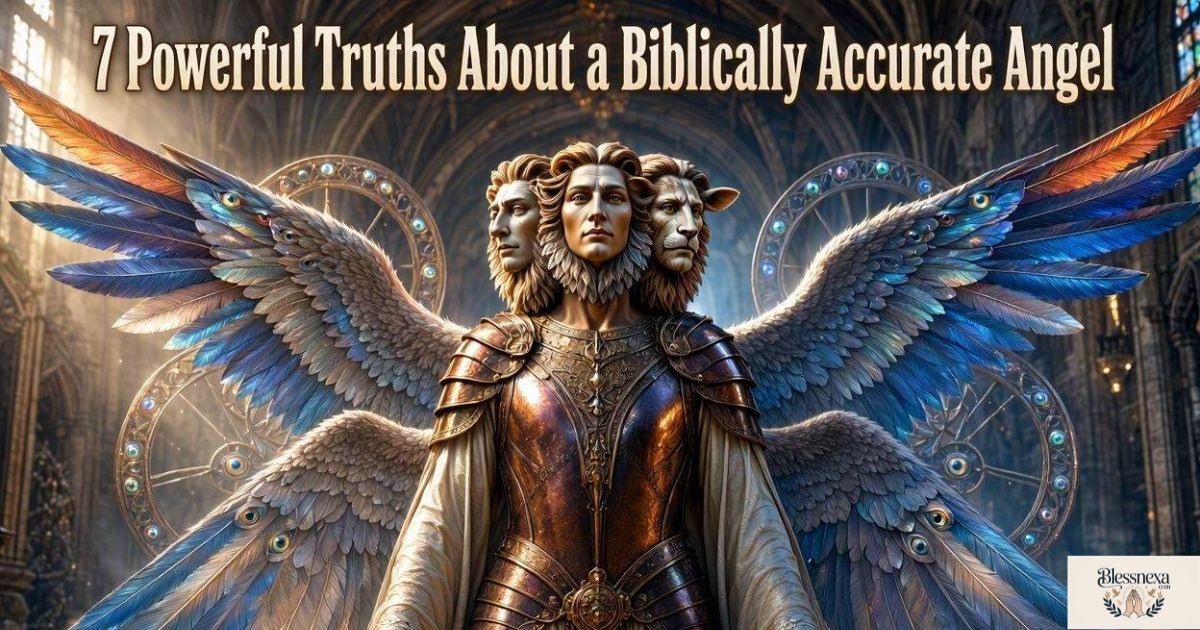
When people hear the phrase biblically accurate angel, they often imagine a frightening creature covered with eyes, multiple wings, or several faces. However, the Bible presents angels in several different forms. Some appear as ordinary men, while others are described with extraordinary heavenly features that are far removed from the soft, human-like figures common in modern artwork.
The most important point is that Scripture does not give one single appearance for every angel. Instead, biblical books describe different heavenly beings according to their nature, role, and setting. Therefore, understanding a biblically accurate angel requires looking carefully at passages about angels, cherubim, seraphim, and other heavenly servants.
The Bible Gives More Than One Picture of an Angel
- A biblically accurate angel cannot be reduced to one universal physical design. Scripture uses the word “angel” primarily in connection with heavenly messengers and servants of God. Different passages describe different beings, and not every unusual heavenly creature described in Scripture is simply called an angel.
- In ordinary biblical scenes, angels can appear remarkably human. For example, visitors associated with Abraham are described in human terms, and Hebrews 13:2 warns that people may show hospitality to angels without realizing it. This creates an important contrast with the spectacular imagery found in prophetic visions.
- Because of this variety, artists should avoid assuming that every angel must have wings, glowing skin, a halo, or a human body floating above clouds. Those features may be artistic traditions, but they are not universal biblical requirements.
- The Bible also distinguishes between angels and specific heavenly beings such as cherubim and seraphim. These descriptions are especially important because they contain some of Scripture’s most unusual imagery. Yet they should not automatically be treated as the standard appearance of every angel.
- A careful reading therefore begins with the text rather than with paintings, movies, games, or internet illustrations. The phrase biblically accurate angel is useful when it encourages people to compare popular images with Scripture instead of assuming that tradition and biblical description are identical.
What Scripture Actually Says About Angelic Appearance
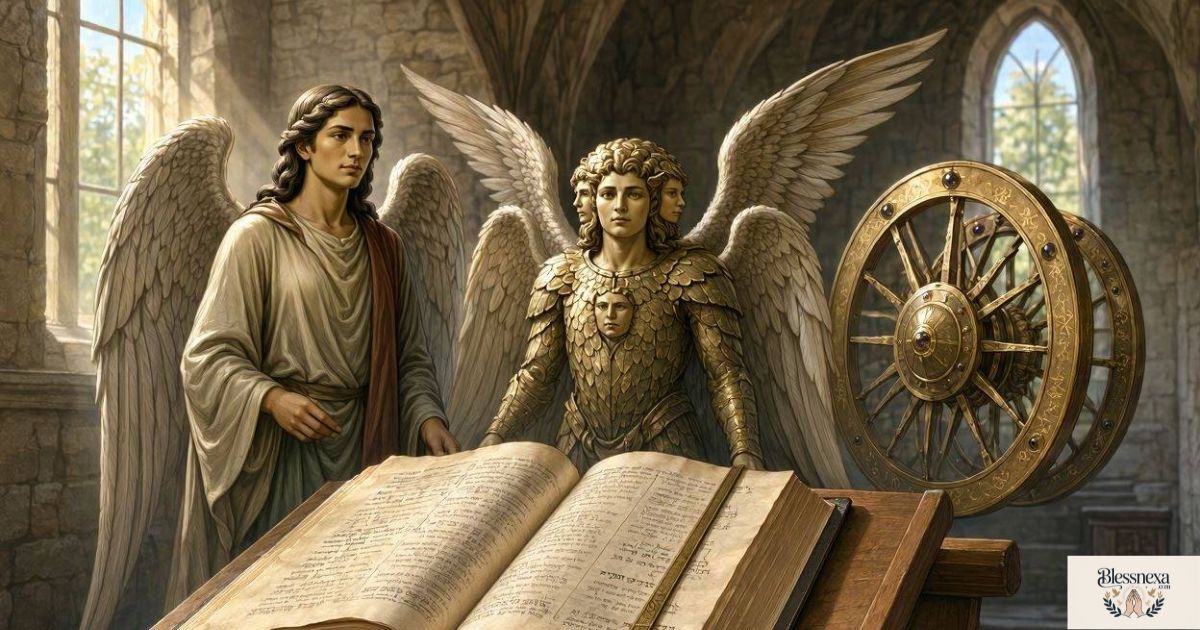
- One striking feature of biblically accurate angel, descriptions is their diversity. Some angels appear as men, while visionary beings possess wings, multiple faces, unusual features, or extraordinary brightness. This means Scripture gives us several categories of imagery rather than one complete anatomical blueprint.
- In Genesis, angelic visitors can interact with humans in ways that appear completely ordinary. They walk, speak, eat, travel, and communicate. Their supernatural identity is not necessarily obvious from their physical appearance alone.
- In other passages, however, heavenly beings look nothing like ordinary humans. Isaiah describes seraphim with six wings. Ezekiel describes cherubim with multiple faces and four wings in his vision. These scenes are among the strongest reasons modern readers search for a biblically accurate angel image.
- Daniel also describes heavenly messengers in human-like language. The appearance can be impressive, radiant, or terrifying without necessarily becoming monstrous. This variation reminds readers that biblical supernatural beings cannot always be represented by one simple visual formula.
- Revelation contains additional symbolic imagery involving heavenly beings, wings, eyes, and worship around God’s throne. Some of these creatures are explicitly identified as living beings rather than simply angels. The distinctions matter when attempting to reconstruct biblical imagery responsibly.
Why “Angel” Does Not Always Mean “Winged Creature”
- The common image of an angel with two feathered wings comes largely from artistic tradition. Scripture does describe winged heavenly beings, but it does not state that every angel has two visible wings.
- A biblically accurate angel may therefore be represented as a human-looking messenger when the biblical passage being illustrated describes one that way. Adding wings simply because the character is called an angel can introduce details that the specific passage never provides.
- The New Testament frequently emphasizes what angels do rather than giving detailed physical descriptions. They announce events, deliver messages, worship God, protect or assist according to God’s purposes, and participate in divine judgment.
- This functional emphasis explains why biblical authors sometimes introduce angels without immediately focusing on their anatomy. Their identity comes from their heavenly mission as much as from their appearance.
- For visual accuracy, artists should first identify the biblically accurate angel,passage and then ask what type of heavenly being appears there. That approach produces a more faithful result than combining random features from several unrelated visions.
Cherubim: The Most Misunderstood Heavenly Beings
- Cherubim are often pictured as chubby babies with tiny wings. That familiar image comes from later artistic traditions, not from the detailed biblical descriptions. Scripture presents cherubim as powerful and awe-inspiring heavenly beings associated with God’s presence.
- Ezekiel’s visions provide the most extensive description. The prophet sees living creatures with four faces, four wings, human-like hands, and legs described in unusual ways. Their movement is closely connected with divine glory and a complex vision of heavenly reality.
- The four faces in Ezekiel’s vision include a human face, a lion’s face, an ox’s face, and an eagle’s face. These details make the cherubim dramatically different from the gentle childlike figures often seen in paintings.
- A biblically accurate angel illustration based specifically on cherubim should therefore be careful with terminology. Cherubim are heavenly beings, but Scripture gives them characteristics that distinguish them from ordinary messenger scenes.
- Ezekiel also describes wheels associated with the living creatures. The wheels are covered with eyes and move in extraordinary ways. Because these details belong to a prophetic vision, they should not automatically be treated as ordinary physical anatomy.
Seraphim Have Six Wings for a Reason
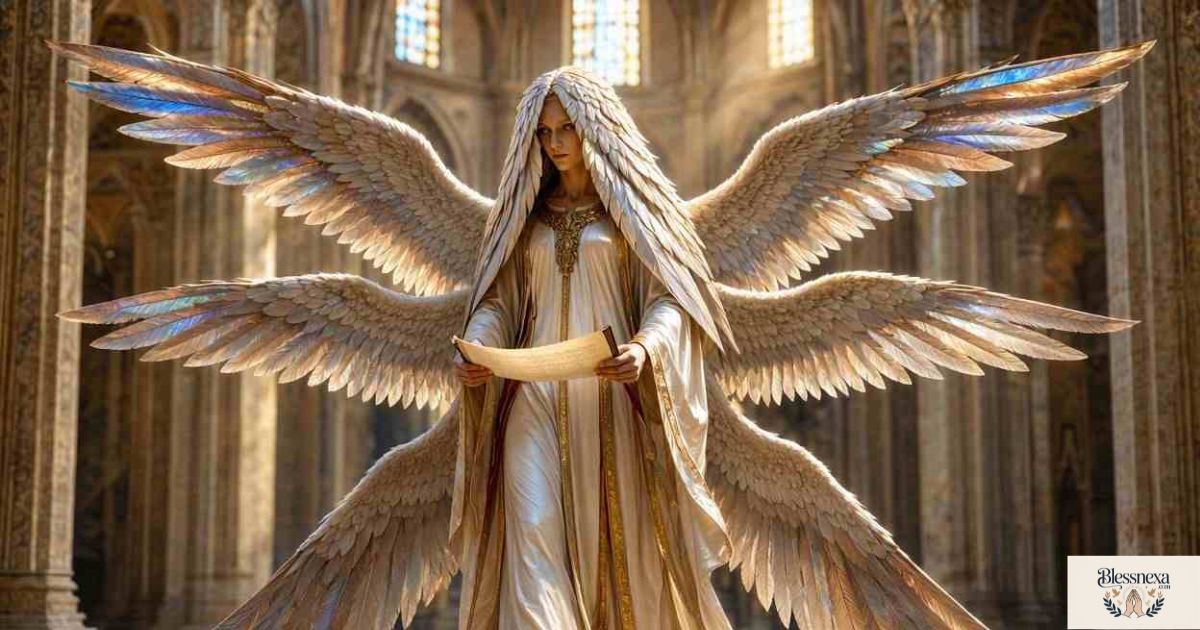
- Isaiah 6 presents one of the clearest descriptions of seraphim. Each seraph has six wings. Two cover the face, two cover the feet, and two are used for flying.
- This is one of the strongest biblically accurate angel, examples showing why a biblically accurate angel should not automatically be drawn with two wings. The number and function of wings can vary according to the heavenly being being described.
- The scene also emphasizes worship. The seraphim proclaim God’s holiness while standing around His throne. Their appearance therefore cannot be separated from their role in the vision.
- Isaiah’s reaction is equally important. The prophet becomes deeply aware of his own unworthiness in the presence of divine holiness. The scene is not designed as a cute fantasy illustration. It communicates majesty, holiness, reverence, and overwhelming spiritual power.
- When artists recreate seraphim, the six wings should remain central to the design. However, the illustration should also respect the fact that Isaiah is describing a prophetic vision rather than providing a modern anatomical photograph.
The Famous “Eyes Everywhere” Image Explained
- Images of heavenly creatures covered with eyes often come from Ezekiel and Revelation. The eyes create one of the most recognizable elements in attempts to portray a biblically accurate angel.
- Ezekiel describes the living creatures as having wheels full of eyes. Revelation also describes heavenly living beings with eyes around and within them. These images appear in highly symbolic visions connected with God’s throne and heavenly worship.
- The eyes may communicate awareness, vigilance, movement, or the extraordinary nature of the heavenly scene. Scripture does not provide a simple sentence explaining every symbolic detail, so readers should avoid claiming certainty where the text does not provide it.
- Popular illustrations sometimes combine eyes, wings, wheels, faces, and halos into one creature. That can create a dramatic image, but it may blend details from several passages instead of accurately representing one particular biblical vision.
- A stronger approach is to identify the source passage first. If the image is based on Ezekiel, use Ezekiel’s details. If it is based on Isaiah, use Isaiah’s details. If it is based on Revelation, clearly distinguish Revelation’s living creatures from other heavenly beings.
Why Angels Sometimes Look Like Ordinary Men
- One of the most surprising biblical facts is that angels are not always introduced as visually terrifying creatures. Several biblically accurate angel, accounts describe angelic visitors in human-like terms.
- In Genesis 18, Abraham encounters visitors who appear as men. In other passages, angels interact with people without immediately revealing an unmistakably supernatural appearance. This is one reason the Bible does not support a single visual template.
- Hebrews 13:2 famously encourages hospitality by reminding readers that some people have welcomed angels without knowing it. The statement makes little sense if every angel must visibly resemble a giant winged creature.
- A biblically accurate angel based on these passages may therefore look like an ordinary human messenger. The supernatural element can come from the message, authority, or later revelation rather than exaggerated physical features.
- This distinction is particularly useful for filmmakers, illustrators, and writers. A scene involving an angelic messenger does not automatically require glowing wings. Biblical accuracy sometimes means showing less, not more.
Why Angels Often Say “Do Not Be Afraid”
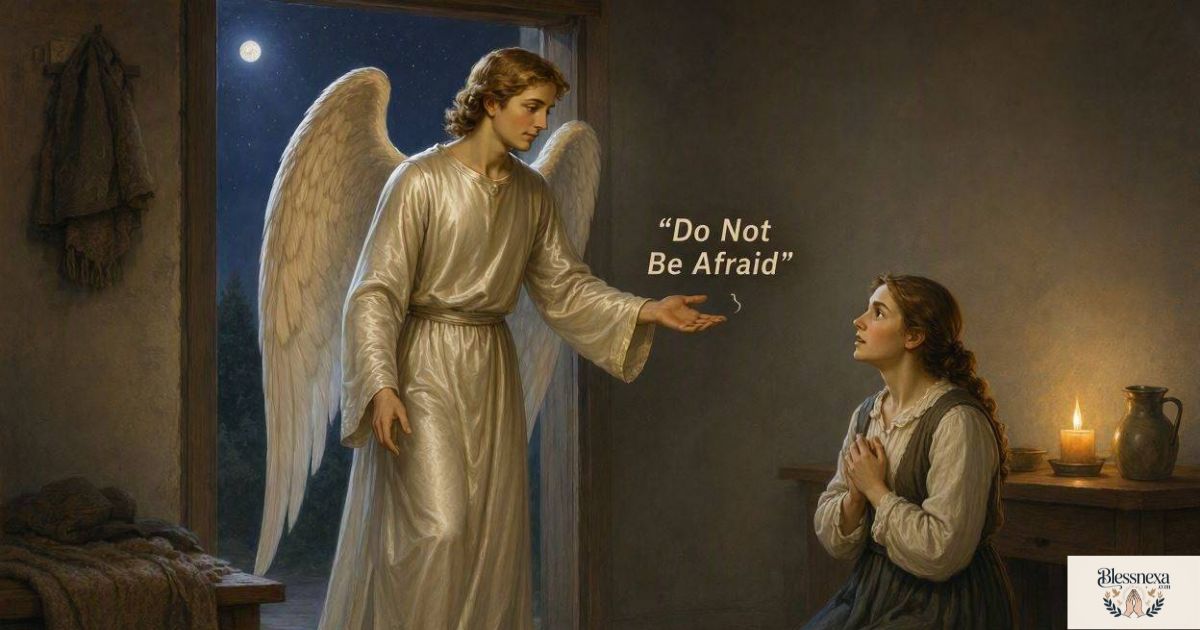
- The repeated biblically accurate angel,instruction not to fear has become one of the strongest clues about how humans respond to angelic encounters. When angels appear, people can become frightened or overwhelmed.
- In Luke 1, Gabriel tells Zechariah not to fear. Later, Gabriel gives Mary reassurance. In Luke 2, an angel announces Jesus’ birth to shepherds, followed by a heavenly host praising God.
- Matthew 28 also records fear surrounding the angel at Jesus’ resurrection. The angel’s presence is connected with an extraordinary event, and the people involved respond with alarm and amazement.
- These passages explain why a biblically accurate angel may look impressive rather than sentimental. The biblical response to angels is frequently awe, fear, astonishment, or reverence.
- However, the phrase “do not fear” does not prove that every angel has a terrifying physical appearance. Fear can also arise because the people understand that they are encountering a supernatural messenger connected with God.
Angels Are Spiritual Beings, Not Human Souls
- Scripture presents angels as created heavenly beings rather than deceased humans who have earned wings. This distinction is important because popular culture frequently blends angels with ideas about human spirits after death.
- Psalm 148 describes heavenly beings within creation, while Colossians 1:16 speaks broadly about created things in heavenly and earthly realms. The Bible consistently places angels within the category of created beings who serve God.
- Hebrews 1:14 describes angels as ministering spirits sent to serve those who will inherit salvation. This passage highlights their role and relationship to God’s purposes.
- Therefore, a biblically accurate angel should not be portrayed simply as a dead person who became an angel. Scripture does not teach the common idea that ordinary believers die and transform into angels.
- Christians may use angelic imagery in symbolic ways, but symbolic art should not be confused with a direct biblical teaching. The distinction helps prevent popular traditions from becoming mistaken for Scripture.
Angels Have Different Roles in the Biblical Story
- biblically accurate angel, angels perform many different tasks. They deliver messages, praise God, execute judgment, assist in divine missions, and appear in moments of major importance.
- Some passages show angels announcing significant events. Gabriel appears in the accounts surrounding the births of John the Baptist and Jesus. Other passages show angels involved in protection, judgment, or heavenly worship.
- A biblically accurate angel is therefore better understood through its assignment than through a fixed costume. Scripture repeatedly presents angels as servants carrying out God’s purposes.
- The biblically accurate angel, also contains references to angels associated with spiritual conflict. Michael is described as an archangel in Jude and appears as a powerful heavenly figure in Daniel and Revelation.
- Because their assignments differ, their appearances and descriptions should not be forced into one visual category. biblically accurate angel, angelology is more varied than many modern images suggest.
Michael and the Meaning of an Archangel
- Michael is one of the most clearly named heavenly beings in Scripture. Jude 9 calls him an archangel, while Daniel presents him as a prominent heavenly prince connected with Israel.
- Revelation 12 depicts Michael and his angels fighting against the dragon and his angels. This passage gives Michael an important role in heavenly conflict.
- A biblically accurate angel depiction of Michael should therefore reflect the biblical emphasis on authority, courage, and spiritual warfare rather than relying solely on decorative fantasy armor.
- Scripture does not provide a detailed physical portrait of Michael comparable to Ezekiel’s description of the cherubim. Consequently, artists have considerable freedom in visual details as long as they avoid presenting invented features as explicit biblical facts.
- Michael’s importance comes primarily from his role and authority within the biblical narrative. The text tells readers more about what he does than exactly what his face, clothing, or body looks like.
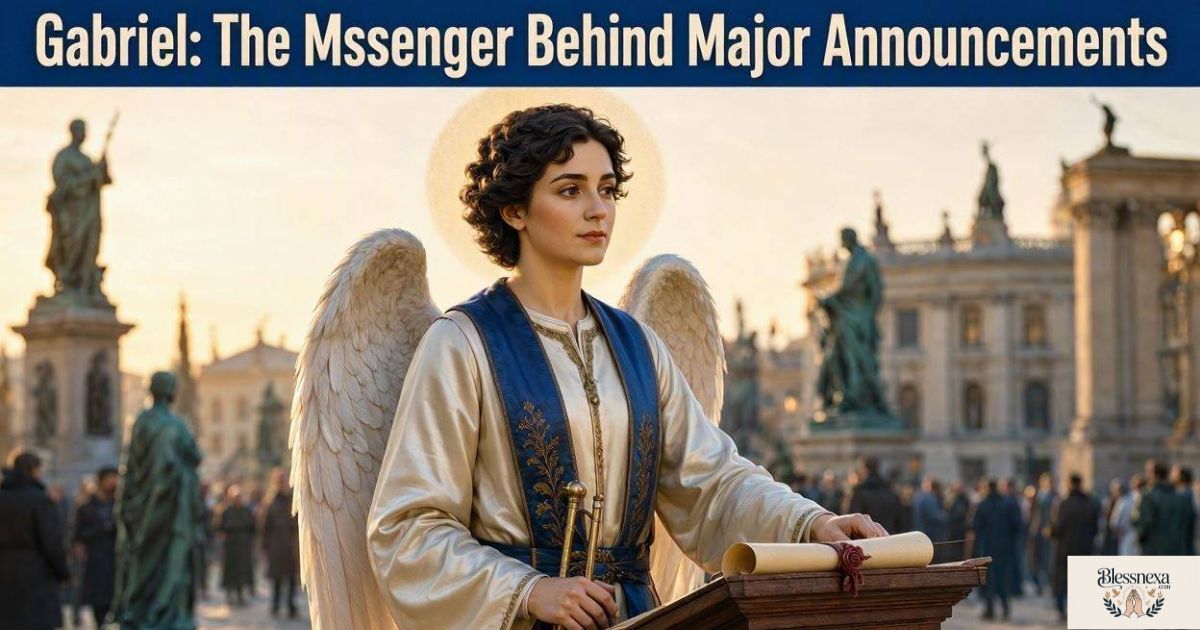
Gabriel: The Messenger Behind Major Announcements
- Gabriel appears in Daniel and the Gospel of Luke. In Daniel, he helps Daniel understand visions. In Luke, he announces major events connected with John and Jesus.
- Gabriel is therefore strongly associated with communication and divine revelation. His importance comes from the messages he delivers rather than from an elaborate physical description.
- When creating a biblically accurate angel image of Gabriel, it is better to focus on dignity, authority, and messenger symbolism than to invent a detailed appearance and claim that Scripture specifically describes it.
- Gabriel is sometimes called an archangel in popular Christian tradition, but the Bible itself does not explicitly use the title “archangel” for Gabriel. Jude specifically uses that title for Michael.
- This small distinction demonstrates why careful biblically accurate angel, writing matters. Religious traditions can contain valuable historical ideas, but they should remain distinguishable from what the biblical text explicitly states.
Do All Angels Have Wings?
- No biblical passage states that every angel has wings. Winged heavenly beings clearly appear in Scripture, but the descriptions vary.
- Seraphim have six wings in Isaiah 6. Cherubim have wings in Ezekiel’s visions. Yet other angelic appearances are described primarily in human terms without a detailed mention of wings.
- This means a biblically accurate angel can be represented without wings when the specific biblically accurate angel,passage does not mention them. Adding wings is not necessarily wrong as artistic symbolism, but it should not be presented as a universal biblically accurate angel, rule.
- The distinction becomes especially important when illustrating individual passages. An artist depicting Isaiah’s seraphim should use the six-wing description. An artist depicting an ordinary angelic messenger should not automatically import the same anatomy.
- In other words, biblically accurate angel, accuracy depends on context. The question should not simply be, “What do angels look like?” It should be, “What does this particular passage say about this particular heavenly being?”
The Difference Between Angels and Cherubim
- Angels and cherubim are frequently grouped together in modern discussions, but Scripture gives cherubim distinctive descriptions and responsibilities.
- Cherubim appear in connection with sacred space and God’s presence. After humanity’s expulsion from Eden, cherubim guard the way to the tree of life. Later biblically accurate angel, descriptions connect cherubim with God’s throne and glory.
- A biblically accurate angel article should therefore avoid calling every unusual creature in Scripture an angel. The broader category of heavenly beings contains different descriptions and roles.
- This distinction also explains why a cherub illustration may look completely different from an angel illustration. The Bible itself gives readers different visual information for different heavenly beings.
- Modern dictionaries and popular websites sometimes use “angel” as a broad label for every supernatural heavenly creature. That can be convenient, but careful biblical study requires more precision.
The Difference Between Angels and Seraphim
- Seraphim are introduced in Isaiah 6 rather than as generic messenger figures. Their six wings and worship around God’s throne make them distinctive.
- The word is connected with the Hebrew term often translated in relation to burning or fiery imagery. This association has contributed to later interpretations emphasizing fiery heavenly beings.
- A biblically accurate angel image inspired by Isaiah should therefore preserve the features actually described in the passage rather than copying a standard European angel painting.
- The seraphim’s central action is worship. They proclaim God’s holiness and participate in the dramatic scene surrounding Isaiah’s calling.
- Their appearance supports the theological message of the passage. The visual details communicate that Isaiah is witnessing something far beyond an ordinary human gathering.
The Bible Versus the Popular Angel Painting
- The familiar Western angel often has a human face, white robe, two feathered wings, a glowing halo, and a peaceful expression. This image can be beautiful, but much of it comes from artistic tradition rather than direct biblical description.
- Scripture never gives a universal instruction that angels must wear white robes. Nor does it establish halos as an anatomical feature. Some biblical passages mention brightness or shining appearance, but that is not equivalent to a standard circular halo.
- A biblically accurate angel can therefore look very different from the figures seen on greeting cards. The biblically accurate angel,record is both more restrained in some passages and more extraordinary in others.
- This does not mean traditional religious artwork has no value. Art often communicates theological ideas symbolically. The problem arises only when artistic conventions are presented as if Scripture explicitly described them.
- Understanding that difference allows readers to appreciate religious art while still asking what the biblically accurate angel,text actually teaches.

Why Modern Movies Make Angels Look Different
- Films often need visually recognizable characters. A pair of wings instantly communicates “angel” to an audience, even when the story does not follow a particular biblically accurate angel, passage.
- Movies may also give angels weapons, armor, glowing eyes, elaborate clothing, or supernatural powers for dramatic purposes. These choices can create compelling fantasy but should not automatically be confused with biblical descriptions.
- A biblically accurate angel for educational content should begin with Scripture rather than cinematic conventions. If the goal is entertainment, creative invention is understandable. If the goal is biblical accuracy, the source text must control the design.
- Video games and fantasy novels often combine angels with demons, mythical creatures, and invented supernatural systems. These worlds can be imaginative, but they represent fictional cosmologies rather than straightforward biblical teaching.
- The same principle applies to internet images. A picture labeled “biblically accurate angel, accurate” may actually combine details from Isaiah, Ezekiel, Daniel, and Revelation without explaining the differences between them.
Are Biblical Angels Supposed to Be Beautiful?
- Scripture does not consistently describe angels as physically beautiful in the modern sense. Some are associated with radiance, glory, majesty, or terrifying supernatural features.
- The word “beautiful” is therefore too limited to capture the biblical picture. A heavenly being can inspire wonder without fitting ordinary human standards of attractiveness.
- A biblically accurate angel may be visually majestic, strange, radiant, or even frightening depending on the passage being illustrated.
- The biblical emphasis is often on holiness and authority rather than physical beauty. Angelic encounters can make humans recognize their own weakness and the greatness of God’s presence.
- This is one reason the modern image of a peaceful, decorative angel can feel so different from prophetic biblical scenes. The two images serve different purposes.
Why Biblical Angels Can Be Frightening
- Fear is a recurring reaction when humans encounter supernatural messengers. People may fall down, become troubled, or struggle to understand what they are seeing.
- The fear does not necessarily mean the angel is evil. Instead, it can reflect the overwhelming difference between ordinary human experience and a direct encounter with a heavenly messenger.
- A biblically accurate angel can therefore be frightening without being demonic. This distinction matters because popular entertainment often equates frightening supernatural appearance with evil.
- Biblical angels can execute judgment, participate in spiritual conflict, or deliver difficult messages while still serving God. Their role is determined by divine authority rather than by whether their appearance seems friendly.
- The recurring command “do not fear” actually strengthens this point. Reassurance is necessary precisely because the encounter can be overwhelming.
Angels Are Not Gods
- Biblical angels possess supernatural abilities, but Scripture does not present them as divine equals. They are created servants who operate under God’s authority.
- Revelation contains scenes where people attempt to worship an biblically accurate angel, and are corrected. The angel directs worship toward God instead. This provides an important boundary between angels and the One they serve.
- A biblically accurate angel should therefore never be portrayed as an independent deity controlling its own universe. biblically accurate angel,remain subordinate to God.
- This distinction also separates biblically accurate angel,angelology from some ancient mythologies in which multiple supernatural beings function as competing gods. The biblical framework places angels within a created heavenly order.
- Their supernatural nature makes them remarkable, but their power does not make them objects of worship. Scripture consistently redirects ultimate worship to God.
Can Angels Be Seen by Humans?
- biblically accurate angel, narratives clearly include moments when humans see angels. However, the Bible also shows that angelic identity is not always obvious.
- Some encounters involve ordinary-looking visitors, while others involve dramatic heavenly manifestations. This variation suggests that Scripture does not present visibility as a fixed property of every angelic appearance.
- A biblically accurate angel scene should therefore consider the narrative context. A quiet encounter may be visually subtle, while a prophetic throne-room vision may be extraordinarily complex.
- Scripture also contains moments where supernatural realities become visible through visions. Ezekiel, Isaiah, Daniel, and John receive visions that reveal heavenly scenes in symbolic and highly detailed ways.
- Readers should therefore avoid treating every visionary description as if it were a simple physical photograph. Prophetic literature often communicates theological realities through powerful imagery.
What the Bible Says About Angels Around Believers
- Scripture contains several passages about angels serving God’s purposes in relation to people. Hebrews 1:14 describes them as ministering spirits connected with those who will inherit salvation.
- Psalm 91 is also frequently associated with angelic protection, although interpretations differ regarding the exact scope of the promise. The broader biblical message is that God can use biblically accurate angel, as part of His providential care.
- A biblically accurate angel should therefore not be presented as an independent guardian whose decisions operate outside God’s will. biblically accurate angel, angelic activity remains under divine authority.
- Christians sometimes speak of “guardian angels.” Matthew 18:10 is often discussed in this connection, although interpretations vary regarding whether the verse establishes a specific guardian angel assigned to every individual.
- It is wise to distinguish biblical statements from later theological conclusions. Scripture supports angelic ministry, but not every popular claim about individual angels is equally explicit.
Angels and the Birth of Jesus
- biblically accurate angel, play an important role in the biblical account of Jesus’ birth. Gabriel announces the coming birth to Mary, while an angel announces the birth to shepherds.
- Luke then describes a multitude of the heavenly host praising God. This scene connects angelic activity with worship, proclamation, and the arrival of a major event in salvation history.
- A biblically accurate angel depiction of the Nativity should therefore reflect the specific Gospel account being illustrated. The text gives enough information to portray the messenger and heavenly host without inventing unnecessary details.
- Traditional Christmas artwork often combines several biblical moments into one peaceful scene. That can be artistically meaningful, but it may not represent the exact sequence found in Luke.
- Thebiblically accurate angel,account also emphasizes the shepherds’ fear and the angel’s reassurance. The event is presented as extraordinary rather than ordinary.
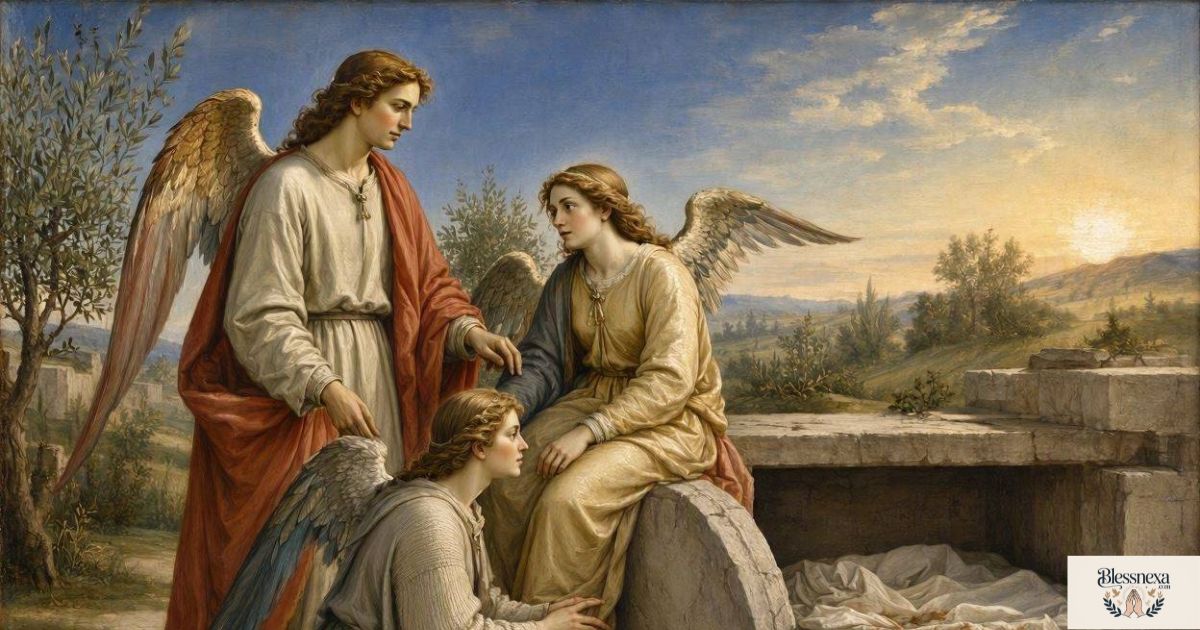
Angels at the Resurrection of Jesus
- The resurrection narratives also include angelic figures. Matthew describes an angel at the tomb whose appearance is associated with brightness and whose presence causes fear among those who see him.
- Other Gospel accounts provide different details about the figures encountered at the empty tomb. These accounts should be read carefully rather than merged into one invented physical portrait.
- A biblically accurate angel in a resurrection scene should communicate the significance of the event without adding unsupported fantasy features.
- The angel’s role is closely tied to announcing what God has done. The central message is more important than the character’s appearance.
- This pattern appears repeatedly throughout Scripture: angels may look extraordinary, but their primary purpose is to serve and communicate within God’s plan.
Angels and Spiritual Warfare
- Scripture sometimes depicts angels participating in conflict against spiritual evil. Daniel describes opposition involving heavenly beings, while Revelation presents Michael and his angels fighting against the dragon.
- These passages have influenced centuries of Christian artwork showing angels with swords, armor, and dramatic battle poses.
- A biblically accurate angel involved in spiritual warfare can reasonably be depicted as powerful and authoritative. However, Scripture does not provide detailed uniforms, armor designs, or weapon specifications for every angel.
- Artists should therefore distinguish between biblical elements and creative additions. A sword may be appropriate in some scenes, while elaborate fantasy armor may simply be an artistic interpretation.
- Theologically, the important point is that angelic warfare remains subordinate to God’s authority. Angels do not function as independent superheroes.
Are Angels Male or Female?
- Biblical angelic appearances are often described using masculine language or human male forms. Gabriel, Michael, and several angelic visitors are discussed with masculine grammatical or personal references.
- Scripture does not provide a standard category of female angels. The common artistic practice of giving angels feminine faces and bodies is largely a later artistic convention.
- A biblically accurate angel should therefore avoid claiming that Scripture explicitly teaches a male-and-female angelic population. The biblical evidence does not provide that level of detail.
- At the same time, readers should distinguish between grammatical description and biological claims. Scripture does not give a complete account of angelic biology or reproduction.
- The safest conclusion is simple: biblical angel descriptions commonly use masculine presentation, but Scripture does not give enough information to construct a complete biological system for angels.
Do Angels Have Bodies?
- The Bible describes angels interacting with the physical world, but it does not provide a complete theological explanation of their bodily nature.
- Hebrews calls angels “spirits,” while biblical narratives show angels appearing in forms that humans can see and interact with. These passages create a picture of spiritual beings capable of manifesting in ways humans perceive.
- A biblically accurate angel should therefore not be treated as a normal biological human being. Scripture presents angels as fundamentally different from ordinary human bodies.
- The biblical descriptions are also not detailed enough to answer every modern scientific question about angelic anatomy. Claims about bones, organs, wings, blood, or metabolism go beyond what Scripture actually states.
- Responsible writing should preserve this uncertainty rather than inventing answers. Biblical accuracy includes knowing where the text stops.
What About Halos?
- Halos are one of the most recognizable features of Christian religious art. However, Scripture does not describe angels as having circular glowing rings around their heads.
- Artists developed halos as visual symbols of holiness, glory, or sacred status. They can be useful artistic shorthand, but they should not be mistaken for a physical feature directly described in the Bible.
- A biblically accurate angel image can include a halo if the goal is traditional Christian artwork. Yet a strict visual reconstruction based only on biblical descriptions would have little reason to require one.
- This distinction is especially important for educational illustrations. Viewers should know whether an image represents Scripture directly or combines Scripture with centuries of artistic symbolism.
- Understanding artistic history makes it easier to appreciate traditional images without confusing them with literal biblical descriptions.
Why “Biblically Accurate” Images Often Look So Strange
- The unusual appearance of many internet angel illustrations comes from combining several biblical passages. Artists may take Ezekiel’s eyes, Isaiah’s six wings, Revelation’s living creatures, and human-like angelic figures and merge them into one design.
- The resulting creature can be visually spectacular. However, it may not correspond to any single passage.
- A biblically accurate angel is more accurately created by choosing one biblical description and following its details carefully. This produces a more precise illustration even if the result appears less sensational.
- Context also prevents confusion between cherubim, seraphim, angels, and living creatures. Each passage should be allowed to speak for itself.
- In this way, biblical accuracy becomes less about creating the scariest possible image and more about faithfully representing the text.
A Simple Comparison of Biblical Heavenly Beings
| Heavenly being | Biblical passage often associated with it | Distinctive description | Main emphasis |
| Angels | Genesis, Daniel, Gospels, Hebrews | Often human-like; appearance varies | Messages and service |
| Cherubim | Genesis, Exodus, Ezekiel | Multiple faces and wings in Ezekiel | God’s presence and glory |
| Seraphim | Isaiah 6 | Six wings | Worship and holiness |
| Michael | Daniel, Jude, Revelation | Heavenly warrior/prince; detailed anatomy not given | Spiritual conflict |
| Gabriel | Daniel, Luke | Messenger; human-like presentation | Revelation and announcements |
| Living creatures | Revelation 4 | Multiple wings and many eyes | Worship around God’s throne |
This comparison shows why a single universal design cannot represent every heavenly being described in Scripture. The Bible itself gives different characteristics and functions.- It also explains why an image labeled biblically accurate angel should ideally identify which passage inspired the design. Without that context, viewers may assume that every feature belongs to every angel.
- The table should be treated as a quick guide rather than a complete study of biblical angelology. Scripture contains many additional references and theological questions.
Seven Biblical Details That Change the Popular Image
- First, not every angel is described with wings. Several angelic encounters emphasize human-like appearance without providing wing details. This challenges the idea that wings are mandatory.
- Second, cherubim are not baby angels. Biblical descriptions present them as extraordinary heavenly beings connected with God’s presence. Their imagery is far more complex than the familiar childlike artwork.
- Third, seraphim have six wings. Isaiah’s description is specific, making the common two-wing design unsuitable when directly illustrating that passage.
- Fourth, angels can inspire fear. People frequently react with alarm during angelic encounters. The biblical phrase “do not fear” appears in several important scenes.
- Fifth, angels are servants. Scripture does not portray them as independent gods. Their supernatural authority remains subordinate to God.
- Sixth, biblical descriptions vary. A single visual template cannot accurately represent every angelic appearance in Scripture.
- Seventh, some details remain unknown. The Bible does not answer every question about angelic anatomy, clothing, age, or physical biology. A responsible biblically accurate angel design should not pretend otherwise.
Common Mistakes in Drawing Biblical Angels
- Mistake one: giving every angel two wings. Two wings are familiar from traditional artwork, but Scripture does not establish this as a universal rule.
- Mistake two: using baby cherubs. The popular cherub image has little connection to Ezekiel’s dramatic description. A serious biblical reconstruction should begin with the actual text.
- Mistake three: adding halos as anatomy. Halos can be symbolic, but Scripture does not identify them as physical angelic features.
- Mistake four: making every angel female. Biblical accounts commonly present angels using masculine language and figures, while Scripture does not establish a standard female angel category.
- Mistake five: combining unrelated visions. Mixing Isaiah, Ezekiel, and Revelation can create an impressive creature but may produce a misleading representation of each individual passage.
- Mistake six: treating angels as dead humans. Scripture does not teach that people become angels after death.
- Mistake seven: inventing certainty. When Scripture does not describe an angel’s exact face, body, or clothing, an artist should acknowledge that creative interpretation is involved.
How to Create a Biblically Accurate Angel Illustration
- Start with the passage. Choose the exact biblical text you want to represent. Do not begin with an existing fantasy picture and try to justify its features afterward.
- Identify the heavenly being. Determine whether the passage refers to an angel, cherub, seraph, archangel, or another heavenly creature. Terminology can prevent major visual errors.
- List explicit features. Write down every physical detail directly stated by the passage. Include wings, faces, eyes, clothing, brightness, movement, and other clearly mentioned elements.
- Separate facts from interpretation. Mark which details Scripture states and which details you must invent. This keeps the final image honest.
- Match the scene’s purpose. A throne-room vision should feel different from a messenger appearing to a family or prophet. Context influences the visual atmosphere.
- Avoid unnecessary additions. If Scripture does not mention a halo, elaborate armor, glowing eyes, or a particular hairstyle, do not claim those features are biblical.
- Label the inspiration. When publishing an image, identify the passage behind it. This helps viewers understand exactly what “biblically accurate” means in that particular design.
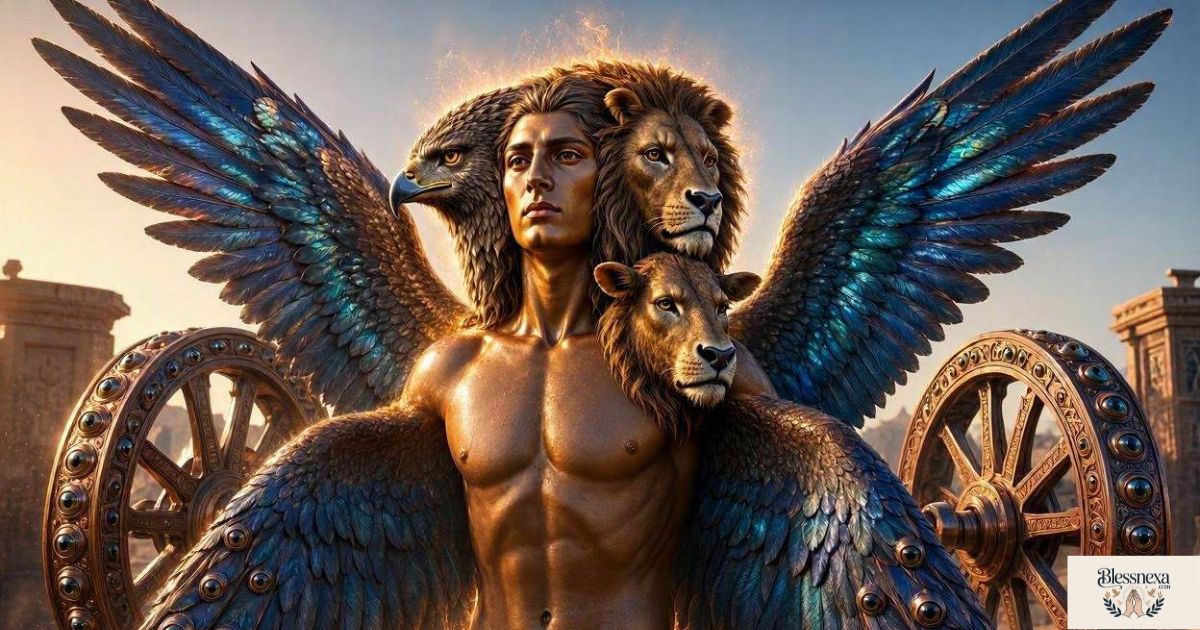
What Does a Truly Biblical Angel Look Like?
- The honest answer is that there is no single appearance. Some angelic figures are described in human-like terms, while other heavenly beings are described with extraordinary features.
- Therefore, a biblically accurate angel can look very different depending on the passage being represented. Scripture does not provide one standardized portrait.
- The most unusual descriptions belong especially to prophetic visions involving cherubim, seraphim, and heavenly living creatures. These scenes should not automatically be applied to every angel in the Bible.
- If someone asks for “the exact biblical angel,” the best response is to ask which biblical passage they mean. Without that context, the question is too broad.
- This may sound less dramatic than a single viral image, but it is much closer to the actual biblical evidence.
What Jesus Taught About Angels
- Jesus referred to angels in several important teachings. He spoke of angels in connection with children, resurrection, judgment, and heavenly realities.
- Matthew 22:30 indicates that angels are not part of ordinary human marriage relationships. This contributes to the biblical distinction between humans and angels.
- Jesus also referred to angels in discussions about resurrection and divine judgment. These references confirm that angels occupy an important place within the biblical worldview.
- A biblically accurate angel should therefore be understood within the wider teaching of Scripture rather than through visual appearance alone.
- The New Testament continues the Old Testament pattern: angels are created heavenly servants who participate in God’s purposes but are not divine beings equal to God.
Are Angels Immortal?
- Jesus’ teaching in Luke 20:36 describes resurrected people as being like angels in a particular respect because they cannot die. This passage is sometimes used to discuss the nature of angels.
- Scripture does not provide a complete systematic explanation of angelic mortality. However, angels are consistently presented as heavenly beings rather than ordinary biological creatures.
- A biblically accurate angel should not be given human aging characteristics simply because it appears human. Human-like appearance does not necessarily mean human biology.
- Popular artwork sometimes portrays angels as young adults forever. That may communicate timelessness, but Scripture does not provide a detailed age system for angels.
- Once again, biblical accuracy requires separating what the text clearly teaches from what later imagination adds.
What Angels Reveal About God’s Holiness
- Angelic appearances often point beyond themselves. In Isaiah 6, the seraphim’s worship emphasizes God’s holiness. In Revelation, heavenly beings continually praise God.
- This pattern suggests that the purpose of angelic imagery is not merely to satisfy curiosity about supernatural anatomy. The descriptions often direct attention toward God’s glory.
- A biblically accurate angel illustration is therefore strongest when it captures the theological purpose of the scene. The creature should not become more important than the God being worshiped.
- This is especially important in religious artwork. The visual spectacle can be powerful, but the biblical narrative generally uses angels as servants, messengers, worshipers, or participants in God’s work.
- Understanding this purpose can make biblical angel imagery much more meaningful than simply making it frightening or visually unusual.
Biblical Accuracy Requires Humility
- Scripture provides many details, but it does not provide everything modern readers may want to know. There is no complete angelic anatomy textbook hidden within the Bible.
- Some questions have clear answers. Angels are heavenly created beings, they serve God, and Scripture gives distinctive descriptions of several categories. Other questions remain uncertain.
- A biblically accurate angel discussion should openly identify those uncertainties. This makes the explanation more trustworthy than pretending that every internet illustration is an exact biblical photograph.
- Humility also protects readers from confusing speculation with doctrine. Christian traditions may contain ideas about angels that go beyond explicit biblical statements.
- The goal should therefore be faithful interpretation rather than sensationalism. Sometimes the most accurate answer is simply, “The Bible does not tell us.”
FAQs
How are angels actually described in the Bible?
- The Bible describes angels in different ways. Some appear in human-like form, while other heavenly beings such as cherubim and seraphim have extraordinary features. Therefore, Scripture does not provide one universal appearance that applies to every angel.
How are angels described in the Bible visually?
- Biblical descriptions include human-like figures, radiant appearances, wings, multiple faces, and other unusual features. However, these characteristics belong to different passages and beings. A specific biblically accurate angel should be based on the exact biblical account being illustrated.
What is a biblically accurate angel called?
- The Bible commonly uses the word “angel” for a messenger or heavenly servant. However, Scripture also describes cherubim, seraphim, and other heavenly beings. These should not automatically be treated as interchangeable terms.
What did Jesus say about angels?
- Jesus referred to angels in several teachings concerning heaven, resurrection, judgment, and God’s care. His teachings reinforce the idea that angels are heavenly beings distinct from ordinary humans.
Who are the biblically accurate angels mentioned in the Bible?
- Named heavenly figures include Michael and Gabriel. Scripture also discusses angels collectively and describes cherubim and seraphim. Michael is explicitly called an archangel, while Gabriel is prominently associated with divine messages.
Do all angels have wings?
- No. Scripture clearly describes winged heavenly beings, but it does not state that every angel has wings. Some angelic visitors appear in human-like form without a detailed mention of wings.
Are cherubim and angels the same thing?
- They are closely related within the broader biblical picture of heavenly beings, but Scripture gives cherubim distinctive descriptions and roles. Therefore, calling every cherub simply an ordinary angel can erase important biblical distinctions.
Why do angels say “fear not”?
- People often react with fear or astonishment when encountering heavenly messengers. The reassurance helps them understand that the encounter is not a reason to panic and prepares them to hear the message being delivered.
Conclusion
The biblical picture of angels is far richer than the familiar image of a beautiful person with two wings and a halo. Scripture describes ordinary-looking messengers, six-winged seraphim, extraordinary cherubim, heavenly living creatures, and powerful figures such as Michael. These descriptions belong to different passages and should not be blended into one universal design.
A biblically accurate angel is therefore not defined by one appearance. Accuracy depends on the biblical passage being represented. Some angels may appear human-like, while other heavenly beings display features that are difficult to imagine. The Bible also leaves many questions unanswered, and acknowledging those limits is part of responsible interpretation.
Ultimately, angelic imagery points beyond the angels themselves. These heavenly beings serve, worship, announce, and participate in God’s purposes. Their unusual appearances remind readers that the biblical world contains realities far greater than ordinary human experience. When Scripture remains the foundation, the subject becomes both fascinating and spiritually meaningful.

welcome to blessnexa I am Muhammad inam an ai powered seo and content writer with 4 years of experienceI help website rank higher , grow traffic ,and look amazing ,my goal is to make SEO and web design simple andeffective for everyone .lets achieve more togather